 ClassMori
Area Calculator: Formulas & Step-by-Step Solutions for Triangles, Trapezoids, Circles & Sectors
Pick a shape and enter its dimensions to calculate the area right away. See the textbook formula worked out step by step with a labeled diagram and unit conversions. Below you'll find an area formula chart, common mistakes, and printable worksheets.
- Free
- No login or sign-up
- Full-screen projector view
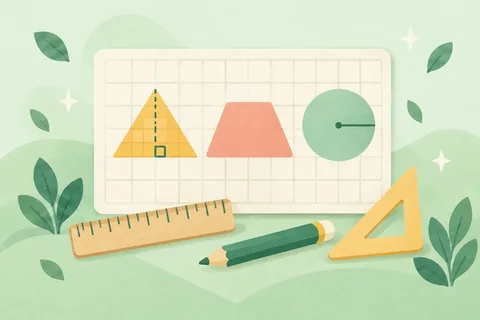
Area Formula Chart
| Shape | Area |
|---|---|
| Square | Side×Side |
| Rectangle | Long×Width |
| Triangle | Base×Height÷2 |
| Parallelogram | Base×Height |
| Trapezoid | (Top base+Bottom base)×Height÷2 |
| Rhombus | Diagonal×Other diagonal÷2 |
| Circle | Radius×Radius×π |
| Sector | Radius×Radius×π×Central angle÷360 |
How to Remember Area Formulas
- Rectangle: count how many 1 cm² squares fit in one row and multiply by the number of rows—that gives Length × Width. A square has four equal sides, so its area is Side × Side.
- Parallelogram: cut off a triangle along the height on one side and move it to the other side to make a rectangle. That's why the area is Base × Height, not the two slanted sides multiplied together.
- Triangle: two identical triangles fit together to make a parallelogram, so a triangle's area is Base × Height ÷ 2.
- Trapezoid: place two identical trapezoids side by side, one flipped upside down, to make a parallelogram with a base of "Top base + Bottom base." So the area is (Top base + Bottom base) × Height ÷ 2.
- Rhombus: the two diagonals frame a rectangle, and the rhombus takes up half of it, so the area is Diagonal × Diagonal ÷ 2.
- Circle: slice a circle into many thin sectors and line them up alternating up and down to form a shape close to a rectangle: the length is half the circumference (Radius × π) and the width is the radius, so the area is Radius × Radius × π.
- Sector: whatever fraction the central angle is of 360°, the sector's area is that same fraction of the full circle—so take the circle's area and multiply by Central angle ÷ 360.
Common Mistakes
- Using a slanted side as the height. The height must be perpendicular to the base (the dashed line on the diagram); the slanted side of a parallelogram or triangle is longer than its height.
- Forgetting to ÷ 2 for triangles, trapezoids, and rhombuses.
- Plugging the diameter directly into the circle formula. The formula uses Radius × Radius, so if you're given the diameter, divide by 2 first.
- Dividing by 180 for a sector. A full circle is 360°, so use Central angle ÷ 360.
- Writing centimeters instead of square units. Area is measured in square centimeters (cm²) or square meters (m²); if length and width are in different units, convert them to the same unit before calculating.
Area Unit Conversions
- 1 cm² = 100 mm²
- 1 m² = 10,000 cm²
- 1 km² = 1,000,000 m²
- 1 in² = 6.4516 cm²
- 1 ft² = 929.0304 cm²
- 1 yd² = 8,361.2736 cm²
When converting area units, multiply or divide by the square of the length factor: 1 m = 100 cm, so 1 m² = 100 × 100 = 10,000 cm².
How it works
Pick a shape
Square, rectangle, triangle, parallelogram, trapezoid, rhombus, circle, or sector. A worked triangle example is ready when you open the page.
Enter dimensions
Enter a number in each box (decimals work too) and choose a unit such as cm or m. For circles and sectors, you can enter either the radius or the diameter.
See the steps and conversions
Below the answer you'll see the formula, each step with your numbers plugged in, and the result converted into other units.
Print a worksheet
Switch to "Worksheet," choose the shape group and number of problems, and click "Print"—an answer key page is printed automatically.
FAQ
Should I use 3.14 or π for pi?
Follow what your problem asks. Elementary school textbooks usually use 3.14; if the problem says "leave in terms of π," choose π and the answer will be written like 25π; if it gives 22/7, choose 22/7.
What is the difference between area and perimeter?
Perimeter is the distance around a shape, measured in centimeters; area is the flat space a shape covers, measured in square centimeters. A square with a 3 cm side has a perimeter of 12 cm and an area of 9 cm².
How many square centimeters are in 1 square meter?
1 m = 100 cm, so 1 m² = 100 × 100 = 10,000 cm², not 100.
Why does the answer sometimes use "≈"?
When a formula doesn't divide evenly (such as for sectors) or when using π, the decimal is rounded and ≈ is used to mean "approximately equal to." Use "Round to" to choose a whole number or 1 to 3 decimal places.
Do I need to download anything or sign in?
No. Just open the page and start using it on a computer, tablet, or phone. Everything stays in your browser and is never uploaded.
More free class tools
 Times tablesWhole-class multiplication quiz for the projector, a printable 12 × 12 chart, and solo practice.Times tablesWhole-class multiplication quiz for the projector, a printable 12 × 12 chart, and solo practice.
 Charades generator486 kid-friendly words in 10 categories. Cards stay hidden until the performer peeks, with a timer and team scores.
 Guess the numberThe computer hides a number from 1 to 100. Students take turns guessing higher or lower as the range shrinks.
 Bulls and cows (1A2B)The computer picks a secret 4-digit code with no repeats. The class uses bulls (A) and cows (B) clues to crack it.
 Mental mathAddition and subtraction within 10 to 1,000, times tables and division, one big question at a time, with team races.
 Tic-tac-toePlay classic two-player mode right away, or have two teams answer a question before claiming a square. 3×3 or 4×4.
 Interactive hundreds chartA big 1–100 chart to project: color squares, highlight skip counting and hide numbers for a guessing game.
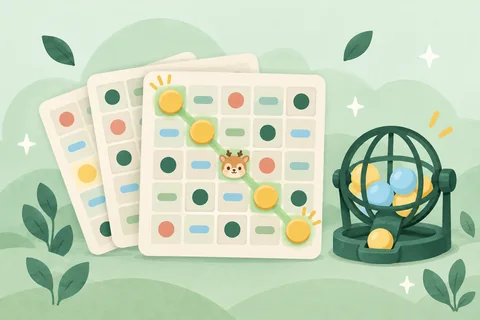 Bingo card generatorPrint a unique bingo card for each student from your word or question list, with a no-repeat caller and card checker.
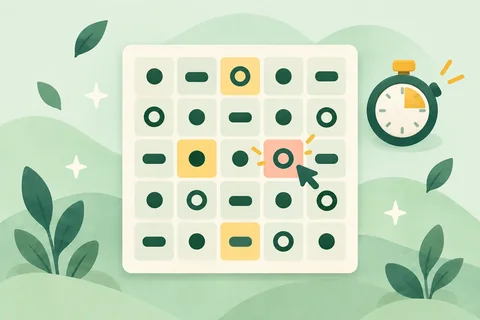 Schulte tableTap 1, 2, 3… in order on a shuffled 3×3 to 6×6 grid. Includes a timer, best times, and a class challenge leaderboard.
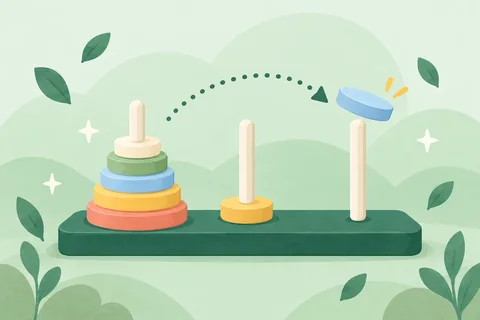 Tower of Hanoi3 to 7 disks—drag or tap to move. Tracks moves against the minimum possible, with undo, hints, and a team race.
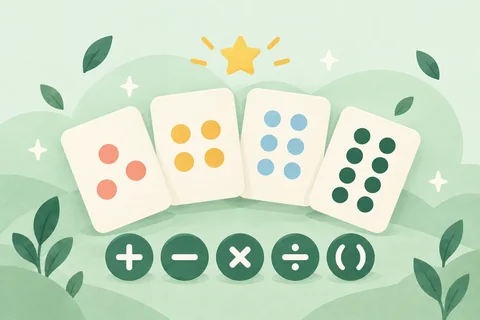 24 gamePlay the 24 math game in class: four number cards that always make 24, instant checking, three levels, and team turns.
 ProtractorBig protractor for the projector: drag either side to measure, see the matching scale light up, and quiz the class.
 MetronomeA big-screen metronome (40–208 BPM, 2/4 to 6/8) with tap tempo and a beat light the whole class can follow.
 Talking alphabet chartTap A–Z in uppercase or lowercase to hear each letter name and word with a picture, or play a listening game.
 American English phonetic chartAll 41 American English sounds (KK & IPA symbols) with spoken example words and a listen-and-pick classroom quiz.
 Factor calculatorFind factors, multiples, and prime factorization, or get the GCF and LCM step by step with the ladder method.
 Fraction calculatorAdd, subtract, multiply, and divide fractions and mixed numbers step by step. Simplify, compare, and print worksheets.English classroom games21 projectable English games for vocabulary, listening, sentences and team quizzes.
 Volume calculatorFind volume and surface area for prisms, cubes, cylinders, and spheres with steps, L/mL conversions, and worksheets.Acorn Estimation JarNEW NewEstimate how many acorns fill the jar, reveal 4 math clues to narrow the range, and count them in rows of 10.Mystery Acorn ChestsNEW NewAnswer a question to pick a numbered chest, then decide to keep it or gift it to another team before opening.Forest Connect Four QuizNEW NewDrop tokens in a 7×6 Connect Four grid using your own oral questions or built-in K–6 mental math.
 Coordinate Memory PairsNEW NewCall out A1–D5 grid coordinates from seats to flip and match icons, mental math, world flags, or custom word pairs.Solar System & Gravity JumpNEW NewExplore planetary orbits, compare true planet sizes side by side, and test gravity jumps from the Moon to Jupiter.Forest Melody GridNEW NewCompose melodies and percussion beats on a 16-step pentatonic grid, or play a team ear-training replay game.Fraction Pizza WorkshopNEW NewSlice pizzas into 2–12 parts, add toppings, stack two pans to prove equivalent fractions, or race on party orders.Forest Pan BalanceNEW NewPlace weights and mystery fruits on a swinging wooden scale, model equality steps, and guess unknown weights.
 Morning Reading Orchard MeterNEW NewRead aloud into the mic to grow blossoms and ripe fruit, or switch to Quiet Nest mode for silent study.
 Forest Trail Board QuestNEW NewRoll the wooden die along a 24-tile forest trail for 2–6 teams, with Vine Shortcuts, Beehives, and quiz tiles.Rekenrek Number RackNEW NewSlide 5-and-5 red-and-white beads on 20-bead or 100-bead racks, with a hide curtain and subitizing flash mode.
 Forest Play-Money RegisterNEW NewCount coins and bills across 9 world currencies to pay exact amounts, make change, and race as team cashiers.Forest Whack-a-Mole DuelNEW NewTap target moles in split-screen 1v1 duels or team relays across multiples, primes, parts of speech, or custom lists.Leaf-Blind Picture RevealNEW NewHide an illustration or your own classroom photo behind numbered wooden tiles and reveal one tile per right answer.Interactive 3D World GlobeNEW NewSpin an offline 3D globe with day/night sunlight, latitude-longitude lines, continents, oceans, and team country hunts.World Flags & Capitals QuizNEW NewQuiz 60 crisp vector flags and capitals by continent—identify the country, pick the right flag, or match capitals.Forest Tangram StudioNEW NewDrag, rotate 45°, and flip 7 wooden tans across 14 forest silhouettes, switching between K–2 guides and pure outlines.Phonics Sound-Box TilesNEW NewBuild words with color-coded consonant, vowel, digraph, and magic-e tiles, sound buttons, blending slider, and 45 cards.
 Reverse CommandFollow the action prompts—and do the opposite when the reverse symbol appears! Run 1 practice round, then 4 team challenge rounds. Quick tap-to-score for teachers, no sign-in needed.Timed Memory RebuildMemorize 6 to 12 shapes, then recreate them in order as a team after they're hidden, scored position by position over three rounds. Project the shapes and answer on paper—no sign-in.
 Team Relay ChallengePass a card around the team circle—warm up first, then race to hit your lap goal. Big buttons for logging laps, easy to host on a phone, no sign-in needed.
 Random name pickerReady to spin with student numbers. Picked numbers are set aside, so nobody is called twice in a round.
 Countdown timerTap 1, 3, 5 or 10 minutes to start. Big numbers for the projector and a chime when time's up.
 Random groupsUses student numbers by default: pick how many groups and split the class evenly in one tap. Names work too.
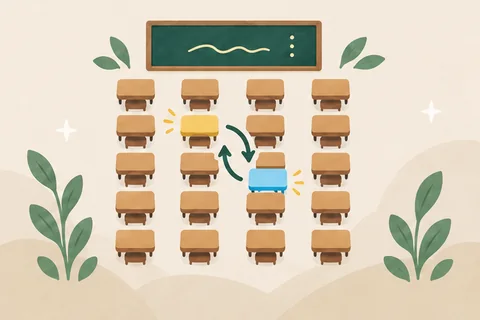 Seating chart makerA 30-seat chart is ready when you open it. Shuffle seats in one click, swap in two taps, and print.
 ScoreboardAdd team points in one tap with big numbers for the projector. Undo mistakes anytime; no point deductions.
 Certificate makerPick an award and print one for every student on Letter or A4, with the wording already written.
 Report card comment generatorTap strengths to get report card comments, parent notes, and subject comments for one student or the whole class.
 Homework boardPost today's homework and reminders on the projector for students to copy, or copy the list to message families.Classroom noise meterLive classroom noise level meter with your mic. Mori covers its ears when it's too loud, plus a quiet challenge.
 Countdown to a dateHow many days until a big test, graduation, or school break? Big numbers for the projector, updated every day.Reward punch cardsPrint a punch card for every student: choose 5–30 spots, add a reward, and fit 2–10 cards per page.
 Handwriting paperPrimary handwriting lines, lined paper, graph paper, and square grids. Pick a size and print—no watermark.
 Random number generatorStarts at 1–30 with no repeats—ready for student numbers. Set any range, draw up to 20 at once, or skip absent kids.Dice & coinUp to three big dice with 6, 10 or 20 sides, and a coin whose two sides you can name. Projector-ready, no login.
 Classroom pollAsk a question with 2–6 options, tap to tally raised hands, and show a live bar chart. Projector-ready, no login.
 Attendance trackerMark all present in one tap on a seat grid, tap seats for absent, late, or excused, and copy the absentee list.
 StopwatchOne tap to start, with a big projector view and lap splits marking fastest and slowest. Stays saved if you refresh.
 Classroom job chartList classroom jobs, set spots per job, add your roster, and see who has each job today and this week. Printable.
 Online clockFull-screen analog and digital classroom clock with the date, plus an interactive teaching clock with movable hands.
 Random order generatorPut the whole class in a fair random order in one click, then step through who's up next on the projector.
 School bellRing a school bell with one tap, or list your bell times and it rings on schedule while the page is open.
 Class grade calculatorPaste class scores for the average, median, SD, pass rate, score distribution, percentile ranks, and weighted grades.
 Date calculatorFind days between dates, add or subtract days, or check exact age and grade level by birth date. Updates as you type.
 Class schedule makerBuild a weekly class schedule in a few taps. Print on Letter or A4, save as an image, or project what's next.
 Math worksheet generatorGenerate printable vertical math worksheets for Grades 1–6 with step-by-step answer keys.