 ClassMori
Teaching articles
600 Classroom Charades Words and Pictionary Prompts for Grades K-6
The best classroom charades words share three traits: instant visual action, zero reliance on adult pop-culture puns, and clear grade-band leveling so a student can start acting or sketching within three seconds. This 600-prompt word bank organizes animals, everyday actions, school routines, jobs, kid-favorite foods, figurative idioms, whiteboard Pictionary sketches, and newcomer EAL vocabulary into copy-ready lists you can project or print whenever you have ten minutes before the bell.
160 Easy Charades Words for Grades K-2: Animals and Everyday Actions
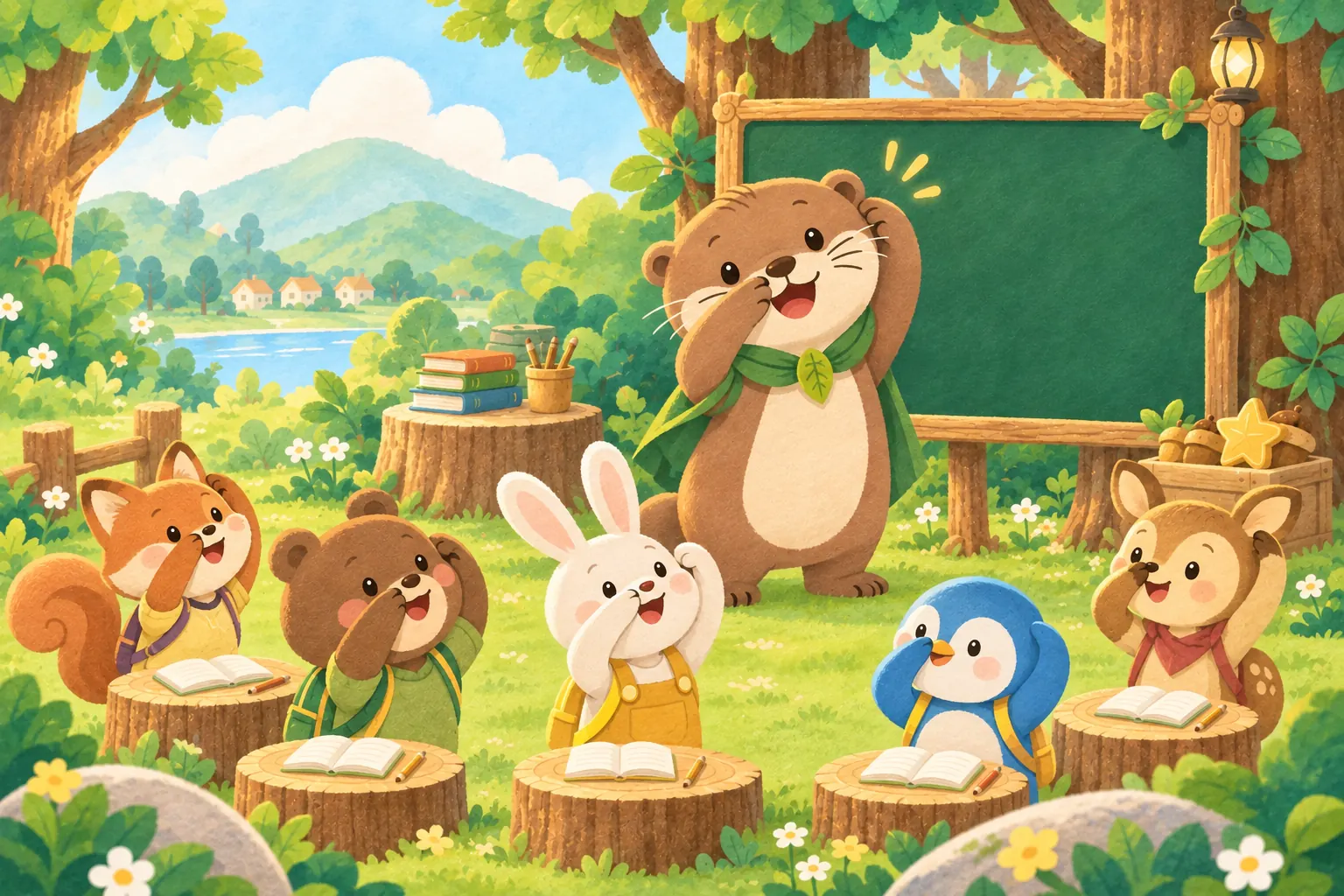
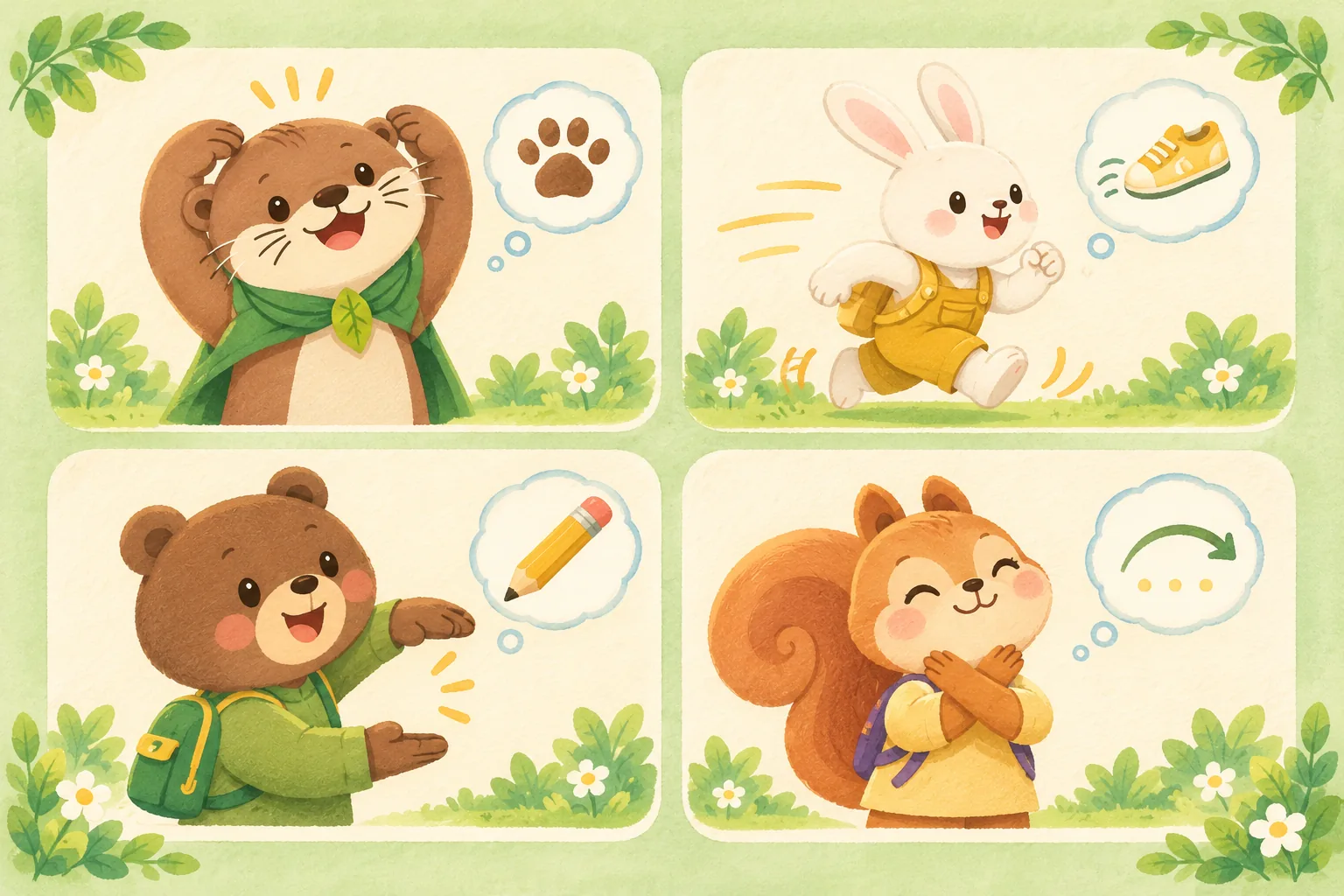
Kindergarten, first-, and second-grade students shine when prompts feature unmistakable full-body silhouettes or motor routines they perform with their own hands every day. Developmental psychology research shows that enacting word meanings through gesture offloads working memory and deepens vocabulary retention across childhood (Goldin-Meadow, 2009). Before calling your first actor up, teach four silent opening signals so classmates narrow down the category immediately instead of shouting random nouns:
| Opening Clue Category | Standard Silent Gesture | How the Class Narrows Guesses | K-2 Teacher Coaching Cue |
|---|---|---|---|
| Animals & Bugs | Curve both hands on top of head like floppy ears | Creatures that fly, hop, crawl, or swim | Watch the ears first—which creature moves like this? |
| Everyday Actions | Pump bent elbows at sides like a slow jog | Verbs, sports, or daily habits | Watch hands and feet—what are they doing? |
| School & Home Objects | Frame a small box in front of chest with palms | Supplies, tools, or foods you can hold | Check the size between their hands—what object fits? |
| Friendly Pass (Skip) | Cross both forearms gently over chest and smile | Move straight to the next card with zero penalty | Stuck past ten seconds? Cross arms and draw a fresh card! |
Animals and Creepy-Crawlies (80 Words)
Start Kindergarten and Grade 1 with creatures known for one signature movement—hopping, waddling, or pinching claws—then move Grade 2 into animals that invite habitats, feeding habits, or slow-versus-fast contrasts. Every list below is comma-separated so you can paste straight into a card generator or table template:
rabbit, kangaroo, elephant, giraffe, penguin, crab, frog, monkey, rooster, cat
puppy, turtle, butterfly, honeybee, caterpillar, snail, squirrel, koala, lion, tiger
hippo, alligator, octopus, jellyfish, dolphin, shark, owl, peacock, swan, woodpecker
sheep, cow, pig, horse, snake, T-Rex, bat, seal, hedgehog, chameleon
polar bear, gorilla, sloth, raccoon, fox, deer, grizzly bear, anteater, bobcat, whale
hermit crab, seahorse, starfish, lobster, praying mantis, beetle, dragonfly, ant, spider, firefly
bald eagle, sparrow, flamingo, ostrich, parrot, duck, goose, hamster, camel, zebra
rhinoceros, pufferfish, flying fish, stag beetle, earthworm, tadpole, lizard, gecko, sea otter, sea turtle
Everyday Actions and Silly Mishaps (80 Words)
Once single nouns feel easy, switch to action phrases with a tiny comedic twist. Students can act every one of these out right beside the teacher's desk without running down aisles:
brushing teeth, washing your face, shampooing hair, combing hair, putting on socks, tying shoelaces, zipping a backpack, slurping noodles, blowing out candles, slicing fruit
peeling a banana, wiping a desk, sweeping the floor, mopping, watering plants, washing hands, clipping fingernails, snoring asleep, big morning stretch, sneezing
yawning, clapping hands, jumping rope, dribbling a basketball, swimming, riding a bicycle, driving a bus, opening an umbrella, buttoning a raincoat, putting on glasses
checking a mirror, taking a photo, talking on a phone, flipping pages, writing with a pencil, painting a picture, cutting paper, blowing up a balloon, folding a paper airplane, zipping a coat
stepping in a puddle, biting a sour lemon, swatting a mosquito, tasting hot soup, carrying a heavy stack of books, chasing the school bus, hunting for a lost eraser, holding in a giggle, hiccuping nonstop, smelling a stinky sock
standing in front of a fan, slipping on ice, tug-of-war, flying a kite, reeling in a huge fish, shooting a three-pointer, goalie diving for a save, rollerblading, hula-hooping, solving a Rubik's cube
missing a claw-machine prize, squeezing too much toothpaste, tiptoeing with a full tray, folding tacos, spiking a volleyball, playing the violin, playing the piano, drumming, conducting a choir, lifting a heavy barbell
scratching an itchy back, blowing your nose, threading a needle, stepping on a plastic brick, blowing dandelion seeds, spinning a top, block tower crashing down, scooping a goldfish, stuck jacket zipper, singing in the shower
160 Middle-Elementary Prompts: School Life, Community Jobs, and Favorite Foods
Third and fourth graders share rich common ground around school traditions, community helpers, and favorite cafeteria or family foods, making two-step sequence prompts a huge hit. If you are planning a seasonal celebration or station rotation before school break, drop any of these lists right into a booth from our classroom party games and station guide. Match your prompt type to acting versus drawing with this quick guide:
| Prompt Category | Best for Acting (Charades) | Best for Drawing (Pictionary) | Quick Classroom Rule |
|---|---|---|---|
| School Life | Carrying a cafeteria lunch tray, playing a recorder, sharpening a pencil | Protractor, globe, school bus, backpack, magnifying glass | Actors may never point directly at real objects in the room |
| Jobs & Roles | Orchestra conductor, firefighter aiming a hose, dentist checking teeth | Chef's tall hat, stethoscope, astronaut helmet, fire truck | Coach actors to mime holding the worker's main tool first |
| Favorite Foods | Pulling stretchy pizza cheese, eating corn on the cob, flipping pancakes | Sunny-side-up egg, ice cream cone, taco, watermelon slice | Actors mime taking one bite first to signal it is a food |
Classroom Supplies and School-Day Moments (60 Words)
Give third and fourth graders one golden rule before starting this set: no pointing at actual supplies sitting on desks! When someone draws "electric pencil sharpener" or "take-home folder," acting out feeding the pencil in and checking the point gets the whole class thinking:
take-home folder, ruler, protractor, compass, pencil sharpener, whiteboard eraser, highlighter, glue stick, safety scissors, watercolor palette
music recorder, paintbrush, dictionary, gym scooter board, dodgeball, relay baton, jump rope, student desk, bulletin board, world globe
magnifying glass, horseshoe magnet, thermometer, reward stamp, award certificate, lunchbox, reusable water bottle, Chromebook, headphones, hall pass
packing your take-home folder, balancing a cafeteria tray, lining up for recess, quiet reading on the rug, saying the morning announcements, doing desk stretches, walking quietly in the hallway, erasing the top of the whiteboard, sorting recycling bins, visiting the school nurse for an ice pack
measuring height on the wall chart, checking out a library book, passing the baton at Field Day, forgetting your recorder, breathing a sigh of relief after a quiz, digging through a messy desk, wiping tables after art, raising your hand to answer, passing papers back, checking lost-and-found
sharpening a broken pencil, stacking chairs at dismissal, safety patrol holding a sign, squeaking on a music recorder, dodging a foam ball in PE, tying gym shoes, carrying heavy library bins, peeking at the lunch menu, waiting for the dismissal bell, zipping an overstuffed backpack
Community Helpers, Jobs, and Performers (50 Words)
Pair this list with Grade 3 social studies units on community roles by asking students to show two distinct tools or actions for each career:
firefighter, crossing guard, mail carrier, school bus driver, train conductor, airline pilot, dentist, eye doctor, school nurse, veterinarian
pizza chef, baker kneading dough, barber, farmer planting seeds, commercial fisher casting a net, carpenter hammering, house painter, auto mechanic, wildlife photographer, TV news anchor
weather forecaster, PE teacher, orchestra conductor, school librarian, grocery cashier, delivery driver, pool lifeguard, astronaut, archaeologist brushing fossils, chemist mixing beakers
magician pulling a rabbit, circus juggler, ballet dancer, breakdancer, sumo wrestler, boxer, archer, balance-beam gymnast, figure skater, marathon runner
baseball catcher, baseball pitcher, table tennis player, surfer riding a wave, scuba diver, rock climber, fencer, puppeteer, yo-yo champion, skateboarder
Kid-Favorite Foods and Fun Ways to Eat Them (50 Words)
Food prompts reliably spark the biggest laughs in Grades 3–4—whether a student is miming long stretchy mozzarella strings, nibbling corn on the cob typewriter-style, or getting brain freeze from a slushie:
pepperoni pizza, grilled cheese sandwich, macaroni and cheese, tacos, spaghetti and meatballs, corn on the cob, pancakes with syrup, waffles, cheeseburger, french fries
chicken nuggets, hot dog, burrito, mashed potatoes, bagel with cream cheese, peanut-free trail mix, apple slices with caramel, banana split, strawberry smoothie, chocolate milk
bubble tea with tapioca pearls, chicken noodle soup, ramen noodles, scrambled eggs, quesadilla, pretzel, nachos with salsa, blueberry muffin, fruit kabob, yogurt parfait
toasting s'mores, movie-theater popcorn, giant cotton candy, double-scoop ice cream cone, brain-freeze slushie, watermelon with seeds, peeling an orange, dipping cookies in milk, eating sushi with chopsticks, flipping a crepe
carving a pumpkin, decorating cupcakes, blowing bubble gum, licking a melting popsicle, cracking a hard-boiled egg, unwrapping a sticky caramel, tossing pizza dough, eating a triple-decker sandwich, sipping hot cocoa with marshmallows, eating sour candy
160 Upper-Elementary Challenges: Kid-Friendly Idioms, Science, and Emotions
Fifth and sixth graders are ready for wordplay, literal-versus-figurative humor, and content-area review—skills directly tied to metalinguistic awareness and reading comprehension (Zipke, 2008). For the idiom bank below, agree on a four-finger "idiom cue" at the start of the turn and forbid mouthing rhyming words; encourage actors to act out the hilarious literal picture first so teammates connect the image to the figurative phrase.
Kid-Friendly Figurative Idioms (80 Prompts)
Every idiom below avoids obscure adult jargon and features vivid animals, body parts, or physical objects that upper-elementary students can dramatize on the spot:
raining cats and dogs, hold your horses, let the cat out of the bag, butterflies in my stomach, elephant in the room, wild goose chase, crocodile tears, ants in your pants, busy as a bee, quiet as a mouse
fish out of water, early bird catches the worm, barking up the wrong tree, bull in a china shop, clam up, copycat, dark horse, eager beaver, lone wolf, night owl
pig out, rat race, sitting duck, snail's pace, social butterfly, straight from the horse's mouth, swan song, take the bull by the horns, watch like a hawk, wolf in sheep's clothing
kill two birds with one stone, when pigs fly, cat got your tongue, stubborn as a mule, sly as a fox, proud as a peacock, happy as a clam, stir up a hornet's nest, chicken out, monkey business
spill the beans, break a leg, cold feet, piece of cake, hit the hay, bite your tongue, cost an arm and a leg, cry over spilled milk, all ears, give someone a hand
head in the clouds, hit the nail on the head, keep your chin up, pull someone's leg, walking on eggshells, under the weather, zip your lip, bend over backwards, bite off more than you can chew, burn the midnight oil
button your lip, cross your fingers, drop the ball, drag your feet, eye to eye, get a second wind, go out on a limb, hang in there, in hot water, jump on the bandwagon
keep an eye on, lose your cool, miss the boat, on the tip of your tongue, out of the blue, play it by ear, roll up your sleeves, shake a leg, steal someone's thunder, throw in the towel
Earth, Space, and Life Science Concepts (40 Words)
Use this deck before unit assessments in Grades 4–6 science—acting out magnetic repulsion, planetary orbit, or static electricity pushes students to translate textbook definitions into accurate physical models:
volcano erupting, earthquake shaking, tornado spinning, rainbow after rain, thunder and lightning, solar eclipse, lunar eclipse, meteor shower, Earth orbiting the Sun, moonwalking in low gravity
astronaut floating in zero gravity, ocean high tide, melting iceberg, landslide, hurricane winds, northern lights, compass pointing north, water evaporating into clouds, stalactite dripping, brushing dinosaur fossils
photosynthesis in a leaf, caterpillar metamorphosis, tadpole growing legs, Venus flytrap snapping shut, sunflower tracking sunlight, dandelion seeds dispersing, cactus storing water, geese migrating in a V, bear hibernating, two north magnets repelling
static electricity raising hair, magnifying glass focusing sunlight, stretching a coiled spring, balancing a seesaw, lifting a load with a pulley, swinging pendulum, sound waves vibrating, ice cube melting, hot-air balloon rising, parachute slowing down
Nuanced Emotions and Sensory Adjectives (40 Words)
Double this set as a pre-writing warm-up before narrative drafting so students observe what "relieved" versus "proud" actually looks like in posture and hands:
bursting with pride, trembling with nerves, blushing shyly, pleasantly surprised, holding back tears, torn between two choices, sudden lightbulb moment, checking the clock anxiously, awkward giggle, moved to happy tears
huge sigh of relief, stomping in frustration, daydreaming out the window, secretly admiring, distracted by a noise, calm and confident, panicked search, bouncing with excitement, laser-focused, furrowing eyebrows in confusion
puckering from sourness, fanning a spicy tongue, bitter medicine face, hopping off hot pavement, shivering in icy wind, plugging nose at a stink, sniffing fresh cookies, sticky syrup fingers, slippery ice patch, fluffy cloud pillow
rock-solid frozen, heavy as a boulder, floating like a feather, dizzy after spinning, groggy wake-up, wide-awake and energized, wiping a sweaty forehead, rumbling hungry stomach, stuffed after Thanksgiving dinner, sore muscles after PE
120 Whiteboard Pictionary Prompts and EAL Starter Words
Whiteboard Pictionary flips the selection criteria: with zero letters, numbers, or rebuses allowed, the best prompts have crisp geometric outlines or funny two-noun collisions you can draw in twenty seconds. Meanwhile, classroom language research demonstrates that pairing new vocabulary with physical enactment strengthens young learners' long-term recall far better than passive picture viewing alone (Tellier, 2008). If you support multilingual learners or want twenty-eight more structured word games, pair the final list below with our classroom vocabulary games guide.
Quick-Sketch Shapes and Funny Mashup Pictionary Prompts (60 Words)
Use the first 30 silhouettes to build confidence with reluctant artists, then unleash the 30 two-part mashups for guaranteed upper-grade laughter:
sunny-side-up egg, sprinkled donut, desert cactus, whole pineapple, watermelon slice, three-ball snowman, decorated pine tree, hot-air balloon, sailboat on waves, submarine periscope
ladder fire truck, ambulance, excavator, Ferris wheel, carousel horse, fairy-tale castle, coastal lighthouse, camping tent, cowboy boot, royal crown
sparkling diamond, sand hourglass, twin-bell alarm clock, doctor's stethoscope, hair dryer, upright vacuum cleaner, gooseneck desk lamp, construction hard hat, pirate telescope, open parachute
penguin in front of a fan, T-Rex brushing teeth, rabbit pulling a giant carrot, octopus playing piano, giraffe wearing three scarves, elephant on a skateboard, turtle crossing a finish tape, crab cutting hair, alien sipping a milkshake, superhero hanging laundry
cat in sunglasses, pig soaking in a hot tub, hedgehog hugging a balloon, shark at the dentist, robot jumping rope, snowman sunbathing, squirrel lifting dumbbells, frog holding a lily-pad umbrella, koala hugging a lamppost, rooster wearing headphones
panda taking a selfie, monkey scrolling a tablet, hippo in a ballet tutu, crocodile flossing teeth, snail towing a camper, kangaroo pushing a shopping cart, owl reading at midnight, unicorn eating an ice cream cone, fox in a funhouse mirror, sloth sprinting a race
Newcomer EAL and Primary Sight-Vocabulary Prompts (60 Words)
For Kindergarten read-aloud extensions, speech-language small groups, or newcomer English learners (EAL/ESL), ask guessers to answer in a complete sentence frame (`"You are..."` or `"It is a..."`) to lock in oral syntax:
rabbit, elephant, monkey, penguin, frog, bird, tiger, fish, turtle, kangaroo
jump, run, swim, fly, dance, sing, sleep, eat, drink, clap
wash hands, brush teeth, open a book, stand up, sit down, ride a bike, play basketball, play baseball, read a book, draw a picture
happy, angry, sad, tired, hungry, thirsty, scared, surprised, sleepy, excited
sunny, rainy, windy, snowy, hot, cold, doctor, teacher, chef, firefighter
police officer, umbrella, backpack, glasses, scissors, camera, play the piano, fly a kite, take a shower, write homework
How to Run 30-Student Classroom Charades Without Chaos
Whether a 30-student guessing game stays joyful or turns into a deafening shouting match comes down to chair orientation and how teams submit guesses. Place a single "Hot Seat" chair at the front facing away from your projector or chalkboard while the actor stands facing the screen; peeking becomes physically impossible, and the on-deck line stays tucked neatly along the side wall out of everyone's sightline:
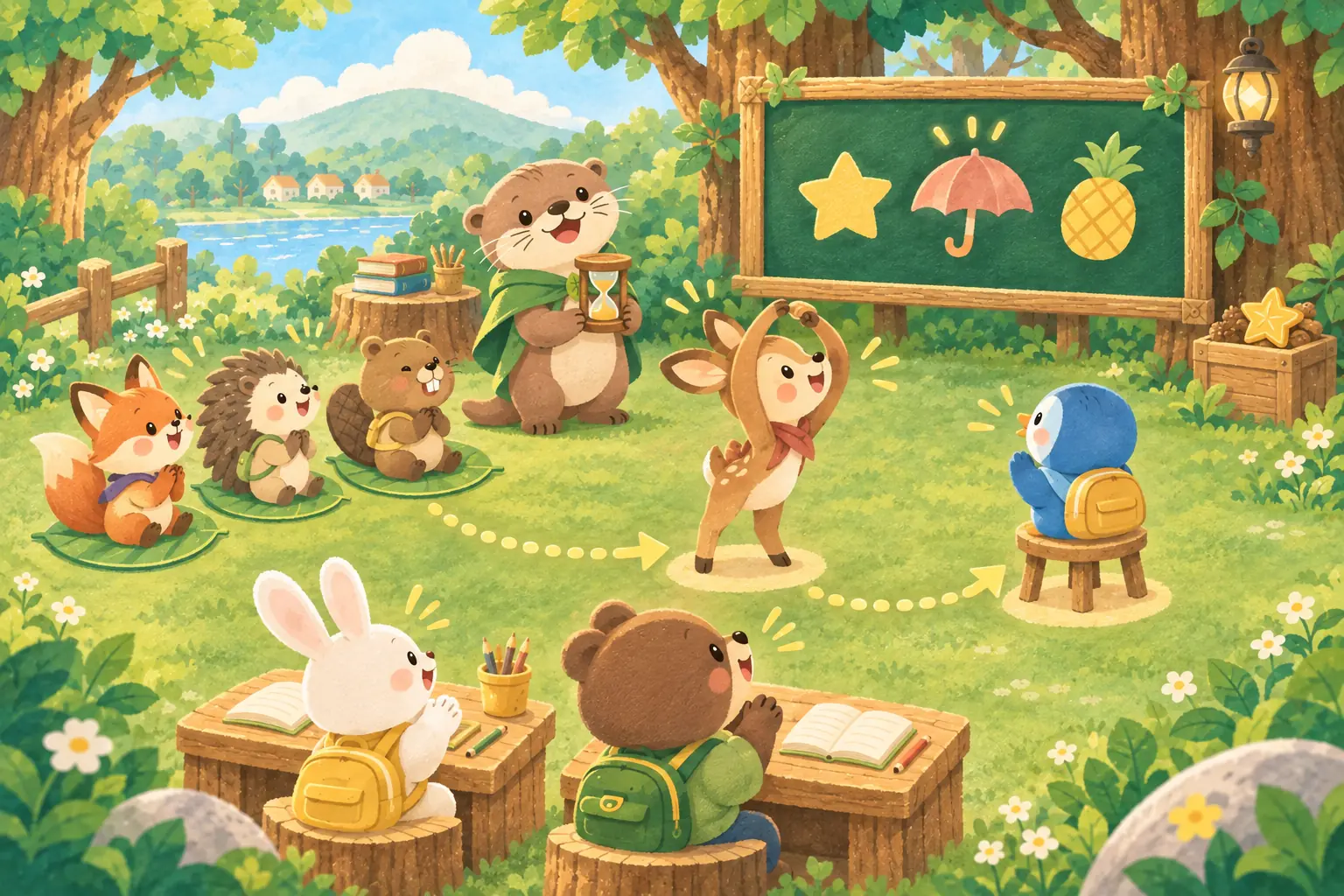
Pick one of these three zero-furniture-moving formats to match your remaining time. When rainy weather keeps everyone inside and you need self-run corner play instead of a teacher-hosted front-of-room game, switch to the small-group card box setup in our indoor recess games four-zone guide.
| Classroom Format | Setup & Guessing Mechanic | Ideal Time Slot | Calm-Room Guardrail |
|---|---|---|---|
| Back-to-Board Hot Seat | 1 guesser sits facing the class; 3 row-mates rotate acting while the audience watches silently | 5–10 minutes | If the audience blurts out the word, the hot-seat team gets +1 automatic point |
| 5-Row Speed Relay | Existing desk rows form 5 teams; 90-second timer per team, swapping actors on each hit | 15 minutes | On-deck actors wait on three taped floor spots along the side wall |
| Silent Mini-Whiteboard Play | 1 student acts or sketches; all 6 table pods whisper and write guesses on dry-erase boards | 15–20 minutes | Zero shouting—safe to play even when the class next door is testing |
Printing Cut-Apart Slip Decks & Posting the 5 Ground Rules
For field trips, outdoor shade time, or Wi-Fi outages, paste forty words into a `4 columns × 10 rows` document table at `18 pt bold`, print on Letter cardstock, and slice into two labeled tubs (`Warm-Up Deck` and `Challenge Deck`) that student leaders can host independently:
1. Start with the category cue: ears for animal, pumping arms for action, box hands for object, four fingers for idiom.
2. Three No's for actors: no sound effects, no mouthing words or rhymes, and no pointing at real objects in the room.
3. Sketchers' rule: draw shapes and arrows only—zero letters, numbers, or punctuation marks on the board.
4. Ten-second lifeline: cross both arms with a smile to pass after ten seconds (up to two passes per round).
5. Calm guessing rule: only raised hands or flipped mini-whiteboards score—blurted answers never count.
FAQ
What are the best easy charades words for Kindergarten, 1st, and 2nd graders?
Start K-2 students with animals that have bold full-body movements (kangaroo, penguin, crab, elephant, frog) and daily routines they physically do every morning (brushing teeth, tying shoes, eating spaghetti, opening an umbrella). Skip abstract adjectives or multi-word puns so every child succeeds in Round 1.
What funny idioms work well for upper-elementary classroom charades?
Choose figurative expressions packed with concrete animals or dramatic actions—such as raining cats and dogs, butterflies in my stomach, spill the beans, hold your horses, cold feet, walking on eggshells, let the cat out of the bag, and crocodile tears. Have actors flash four fingers first to signal an idiom.
How do good Pictionary words differ from good charades words?
Charades thrives on continuous verbs, sports, and facial reactions (stepping in a puddle, sneezing, tug-of-war), whereas whiteboard Pictionary needs distinct silhouettes you can sketch in five seconds without letters (fried egg, cactus, fire truck, penguin next to a fan). Separating the two lists prevents mid-round stalls.
How do you play charades with 30 students without shouting or peeking at the screen?
Place one sturdy chair at the front facing away from the projector or chalkboard for the guesser while performers look at the prompt behind them, eliminating peeking by design. For whole-class play, require silent raised hands or have table pods write answers on mini dry-erase boards and flip on three.
Sources
- How Gesture Promotes Learning Throughout ChildhoodChild Development Perspectives2009
- The effect of gestures on second language memorisation by young childrenGesture2008
- Teaching Metalinguistic Awareness and Reading Comprehension With RiddlesThe Reading Teacher2008
- Classroom Management — Coalition for Psychology in Schools and EducationAmerican Psychological Association2023