 ClassMori
Teaching articles
25 Attention Getters for Classroom Transitions Without Yelling

The most reliable attention getters for classroom transitions work not because the chant is clever, but because you wait for 100% empty hands and three full seconds of silence before speaking. Once students notice a teacher talking over lingering whispers or clicking markers, even the catchiest callback turns into background noise before October.
Below are 25 classroom-tested verbal, rhythmic, and zero-voice signals sorted for Grades K–2, all-grade specials, and upper-elementary Grades 3–6, along with a two-minute stopwatch training game and a podium cheat sheet you can print today.
Why Signals Wear Out — and the 'Stop, Look, Wait 3 Seconds' Rule
Callbacks fail mid-semester for two simple reasons: kids chant the words while their hands keep cutting paper, or the teacher starts explaining at 85% quiet. Evidence reviews of universal classroom prompts (Simonsen et al., 2008; Center on PBIS, 2022) emphasize pairing every attention cue with an explicit observable behavior and active scan—while epidemiological research by Roy et al. (2004) in the Journal of Speech, Language, and Hearing Research found lifetime voice disorders in 57.7% of teachers versus 28.8% of non-teachers, proving how punishing it is to out-volume twenty-eight kids five times an hour.
Lock every cue in your room to the exact same Stop, Look, Wait 3 routine:
- STOP (Empty Hands): Answering the cue always means pencils, scissors, Chromebooks, and water bottles leave students' hands. Any child still holding a glue stick will go right back to gluing two seconds later.
- LOOK (chin & eyes on the speaker): Shoulders pivot out of table huddles toward where you are standing, cleanly breaking side conversations.
- WAIT 3 SECONDS (100% silence before 1 crisp direction): Give your signal once, close your own mouth, and scan warmly. Count "one-one-thousand, two-one-thousand, three-one-thousand" in complete quiet, then deliver your single next step in a calm, lower-than-normal voice.
If mornings are your roughest transition window, pair your signal with the self-serve arrival trays in our classroom homework tracker routine so twenty kids are not crowded around your desk when the first chime rings.
25 Tested Attention Getters for Classroom Grades K-6
Pick signals that match your students' developmental stage: first graders love silly motion rhymes that tell wiggly fingers where to land, whereas fifth graders roll their eyes at babyish songs and respond far faster to crisp rhythm claps, academic callbacks, or silent countdowns.
| Grade Band | Signal Style | How Teacher Launches | Exact Student Response |
|---|---|---|---|
| Grades K–2 | Motor Call-and-Response | Say call at calm volume while modeling hand motion | Echo phrase + hands land in lap or on head |
| Grades 3–4 | Rhythm Echo & Crisp Cues | Clap a 5-beat pattern or speak a 3-word prompt | Echo exact rhythm + set pencils down + eyes forward |
| Grades 5–6 | Academic Callbacks & Countdowns | Desk tap, math/vocab call, or 5-finger countdown | Zero babyish chanting; pens down and chin up in <=5 sec |
| Specials & All Grades | Chime & Zero-Voice Copycat | Single desk bell note or silent gesture sequence | Freeze before chime fades or mirror silent motion |
Copy, print, and tape this 25-signal cheat sheet to the corner of your podium or sub binder so guest teachers and specials colleagues can run your exact cues:
PART 1: GRADES K-2 — BUILT-IN HAND MOTIONS (8 Signals)
1. Teacher: "Hands on top!" -> Students (hands on head): "That means stop!"
2. Teacher: "Macaroni and cheese!" -> Students: "Everybody freeze!" (statue hands)
3. Teacher: "Hocus pocus..." -> Students (finger eyeglasses): "Everybody focus!"
4. Teacher: "1, 2, 3, eyes on me!" -> Students: "1, 2, eyes on you!" (hands in lap)
5. Teacher: "Criss-cross..." -> Students: "Applesauce, spoons in the bowl!" (hands resting in lap)
6. Teacher: "Zip it, lock it..." -> Students (mime key): "Put it in your pocket!" (silent lips)
7. Teacher: "Peanut butter..." -> Students: "Jelly!" (only if allergy-safe culture; swap "Pancakes -> Syrup!")
8. Teacher: "Touch your head, touch your shoulders..." -> Students mirror silently as voice drops to a whisper: "Hands flat on desks."

PART 2: ALL GRADES & SPECIALS — ZERO-VOICE THROAT SAVERS (8 Signals)
9. Single Brass Chime: Ring one long note -> students freeze with empty hands before the ring fades out.
10. Give Me Five Hand: Raise one silent open palm (Eyes watching, Ears listening, Lips closed, Hands still, Body calm) -> students raise palm and go silent as it ripples across pods.
11. Classic Ta-Ti-Ta Clap: Clap "boom, boom, boom-boom-boom" -> class echoes once and clasps hands on desks.
12. Shrinking Ghost Claps: Clap 4 beats normal, 4 beats with two fingers, 4 silent air-claps -> room volume drops to zero with you.
13. Rainstorm Waterfall: Raise wiggling fingers high with a soft "Shhhhh" and float hands slowly onto desks -> silence lands when palms touch wood.
14. Silent Copycat: Stand at front without a word tapping nose, chin, then folded arms -> observant kids join in until all 28 mirror you in 8 seconds.
15. 16-Beat Metronome Reset: Flip on an 80-BPM beat light -> students cap markers and sit tall before beat #16.
16. Half-Light Cue: Dim one bank of front ceiling lights -> universal 3-second signal to wrap final sentence and look forward.

PART 3: GRADES 3-6 — CRISP, NON-BABYISH & ACADEMIC CUES (9 Signals)
17. Silent 5-Finger Countdown: Hold up 5 fingers and fold one per second calmly -> pods finish their thought and face front by "1."
18. Whisper-Match "Class, Class?": Speak in a tiny whisper -> students must match your exact whisper pitch and volume ("Yes, yes!").
19. Teacher: "Flat tire..." -> Students: "Shhhhhhhh!" (lets air out while dropping room volume to Level 0)
20. Teacher: "Waterfall..." -> Students: "Shhhhhhhh!" (fingers float down onto closed Chromebook lids)
21. Math Fact Callback: Teacher calls "7 times 8!" -> Students answer "56!" (swap weekly for current unit facts or "3.14 -> 159!")
22. Content Vocab Pair: Teacher calls "Photosynthesis needs..." -> Students answer "Sunlight!" (tie to this week's science/history anchor word)
23. Teacher: "Check, one-two..." -> Students (one crisp clap): "Mic is off!"
24. Teacher: "Pause button..." -> Students: "Pressed!" (pencils rest immediately on notebooks)
25. Knuckle Triple-Tap: Tap podium "knock, knock-knock" beside the projector timer -> upper-grade cue for silent eyes on the screen prompt.Want an effortless non-verbal cue for center cleanups? Project a big visual beat light and challenge the class to cap every marker within twenty beats:
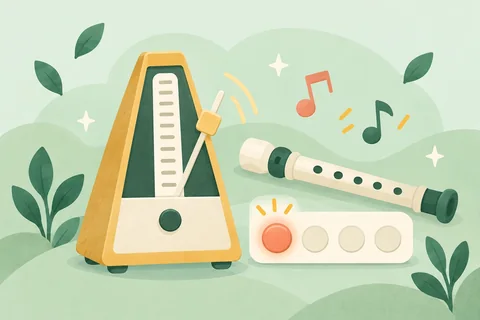 Free toolsMetronomeProject a full-screen classroom metronome (40–208 BPM, with optional silent beat-light mode) to pace 15-second supply cleanups without saying a word.Open the tool
Build Transition Muscle Memory in 2 Minutes a Day
Expecting a brand-new signal to work during a chaotic Friday art project without practice sets everyone up to fail. Writing on classroom transitions for Edutopia, Todd Finley (2017) highlights a golden rule: when a transition gets sloppy, skip the five-minute lecture and immediately model + run a brisk 30-second do-over. Spend two minutes a day during Week 1—and the first two days back from winter or spring break—running this low-stakes drill:
- Model a funny "Fake Pause" non-example first: Act out shouting "Eyes on you!" while noisily sharpening a pencil and whispering to an imaginary neighbor. Kids laugh—and instantly grasp what 100% empty hands actually looks like.
- Play "Beat Yesterday's Stopwatch": Tell the class, "Talk as animatedly as you want with your partner about pizza toppings—when you hear the chime, let's clock on the stopwatch how fast every single pencil is down." If Round 1 takes 11.4 seconds, smile and try once more to beat 7.0 seconds—competing strictly against the class's own record.
- Let projector timers and noise gauges warn tables ahead of time: Nobody likes being cut off mid-sentence. Project a 1-minute countdown timer or visual sound gauge from our classroom noise monitor guide before ringing your chime so groups wind down smoothly.
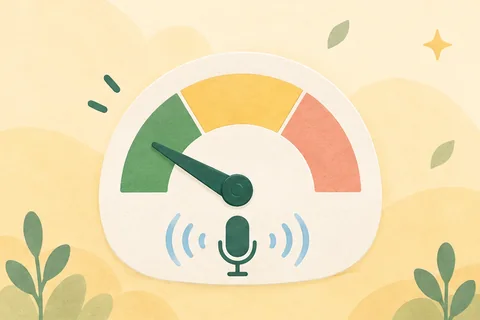 Free toolsClassroom noise meterDisplay live relative classroom volume during partner talk and cleanups—processed locally in your browser with zero audio recording—so students keep Mori sleeping calmly before your transition chime even rings.Open the tool
Keep Just 3 Signals Per Quarter and Reinforce the Fastest Table
Having twenty-five ideas in your pocket does not mean introducing a new chant every Tuesday—changing cues daily leaves kids guessing instead of pausing. Lock in three predictable signal slots per quarter matching your elementary classroom rules charter, and swap only Slot #3 when novelty dips:
| Transition Slot | Dedicated Signal Role | Rotation Cadence | Quick Tune-Up If It Slows Down |
|---|---|---|---|
| Slot 1: Post-Recess & Cleanup | Visual countdown or metronome + 1 chime note | Keep consistent all year | Run one 60-second Stopwatch Personal Best rep |
| Slot 2: Pods Back to Whole Group | Silent Give-Me-Five or Ta-Ti-Ta clap | Tweak rhythm once a month | Switch to Shrinking Ghost Claps to pull volume down |
| Slot 3: Afternoon Energy Boost | Academic fact callback or K–2 motion rhyme | Swap every 2 weeks with unit vocab | Let Friday's steadiest table pick Monday's new callback |
What you do in the first three seconds after ringing the chime makes or breaks the habit. When Pods 1 through 5 freeze and Pod 6 is still stacking fraction tiles, keep your eyes off Pod 6 for two beats and narrate positive specifics: "Pod 2 has every hand empty and eyes forward—thank you; Pod 4 is right there too." Within two seconds, Pod 6 snaps into place without a single cross word.
FeaturesQuick points & projector viewTap the fastest table pod or the whole class for "+1 Crisp Transition" or "+1 Eyes Up & Hands Empty" on the projector in two taps—with instant undo if needed.Learn morePaired with built-in class tools (placing your no-repeat name picker, countdown timer, random groups, 6-step instruction board, and quiet challenge right next to class points), every fast transition helps each student's individual woodland companion (40 species evolving from a Lv.0 egg across Lv.1, Lv.10, Lv.20, and Lv.30 in the shared Pet Forest) grow steadily—saving your voice all semester long.
FAQ
Why do classroom attention getters stop working after two weeks?
Almost every faded signal comes down to one habit: giving directions when only 80% of the class has stopped talking. When five students keep whispering or gluing while you speak, the whole room learns the signal is optional. Wait calmly with a warm smile until 100% of hands are empty before saying word one.
What attention getters work for 4th, 5th, and 6th graders who roll their eyes at chants?
Drop nursery-rhyme callbacks in upper elementary and use crisp rhythm echoes, content-area callbacks (such as multiplication facts or vocabulary pairs), a single brass chime note, or a silent raised five-finger hand paired with a 10-second screen countdown.
How do I get my class's attention right after recess when energy is sky-high?
Do not demand instant statue silence the second sweaty kids walk through the door. Run a two-stage landing: give a 60-second timer for water sips and stowing jackets while projecting a visual noise gauge, then ring your single chime note for the final 5-second transition to Level 0.
What zero-voice signals protect a hoarse or tired teacher throat?
Clinical voice studies show teachers experience voice disorders at more than double the rate of the general public (Roy et al., 2004). Keep a brass Zenergy chime or wireless doorbell on your lanyard, project a visual metronome beat for cleanups, and use 'Silent Copycat' hand patterns so you never shout over group hum.
What should I do when 26 kids freeze on the signal, but 2 students keep talking?
Resist scolding the whole room or calling out the two talkers from thirty feet away. Immediately praise two adjacent pods specifically—'Pod 1 has pencils down and eyes up, Pod 3 is locked in'—while walking calmly toward the lingering pair to tap their table edge.
Sources
- Evidence-based Practices in Classroom Management: Considerations for Research to PracticeEducation and Treatment of Children2008
- Supporting and Responding to Students' Social, Emotional, and Behavioral Needs: Evidence-Based Practices for EducatorsCenter on PBIS2022
- Mastering Classroom TransitionsEdutopia2017
- Prevalence of Voice Disorders in Teachers and the General PopulationJournal of Speech, Language, and Hearing Research2004