 ClassMori
Teaching articles
Elementary Classroom Rules That Stick: Co-Created Class Charter Guide
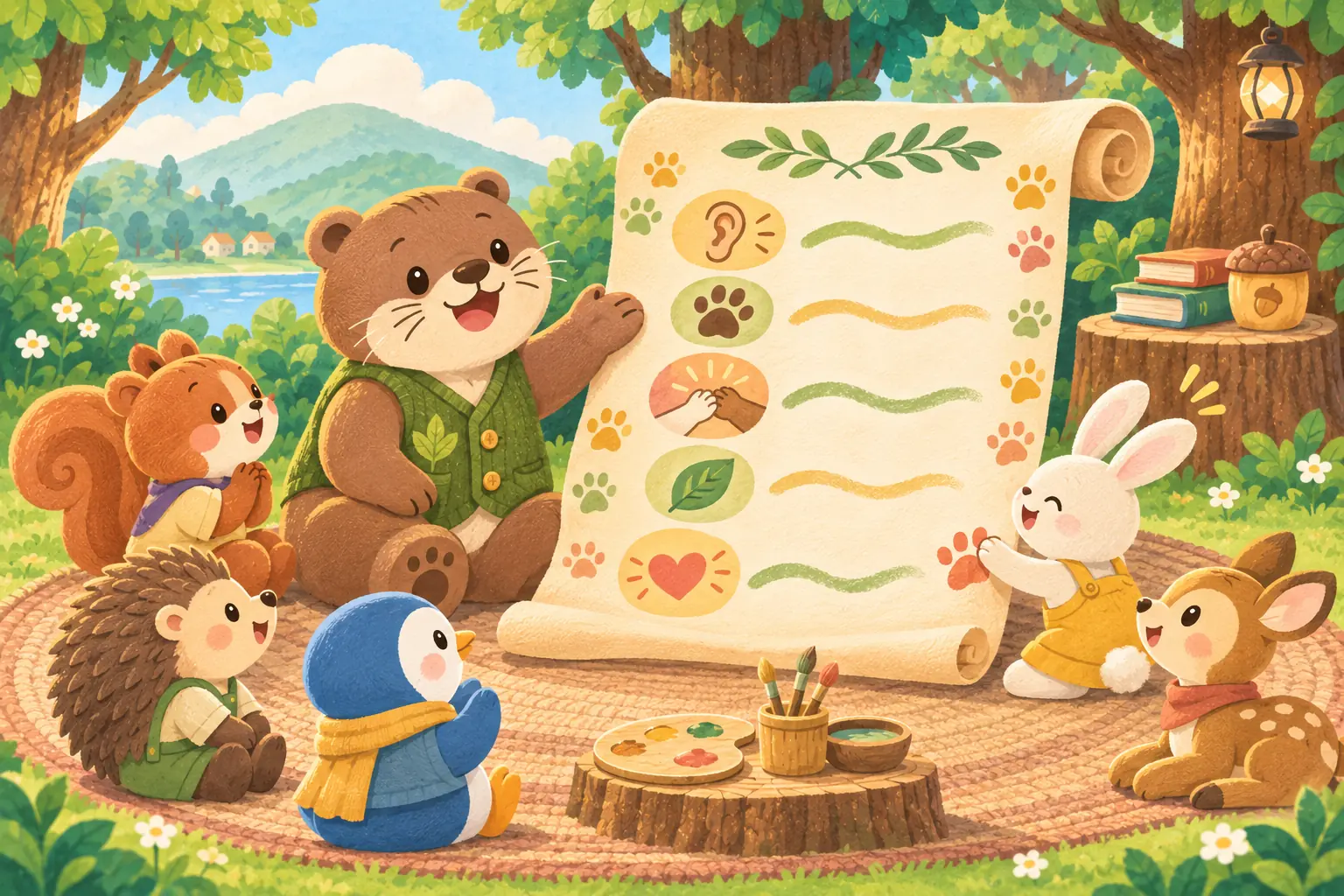
Effective elementary classroom rules stick to 3 to 5 co-created, positively stated actions that tell students what to do with their hands, feet, and voices right now. Laminated posters fade into invisible wallpaper by mid-September when they list fifteen "No" statements, rely on vague adjectives like "Be good," or never connect back to daily teacher feedback. Below you will find a "Don't to Do" rewrite table, grade-leveled rule banks for K–2, 3–4, and 5–6, a 30-minute Day-1 charter lesson plan, and a ready-to-send family welcome letter.
Why Long Lists of 'Don't' Rules Fade After Week One
Literature syntheses of classroom expectations across K–12 settings identify four traits shared by rules that actually reduce disruptions: small in number (3 to 5), stated positively, observable in concrete terms, and explicitly modeled and practiced during the first weeks of school (Alter & Haydon, 2017; Simonsen et al., 2008). Posting twelve lines of "Don't run, don't shout out, don't touch others' stuff" backfires in three predictable ways:
- Prohibitions name the impulse without teaching the replacement: Hearing "Don't run in the hallway!" puts the mental picture of running front and center—prompting creative loopholes like speed-walking, skipping, or sliding along lockers. Saying "Walk on the right with calm feet" gives a six-year-old's body an immediate motor script.
- Vague character words spark endless debates: "Be respectful" means one thing to a teacher and five different things to nine-year-olds. Rewriting it as "Wait until the speaker finishes, then raise your hand" removes guesswork for neurodivergent and literal thinkers alike.
- Punitive group clauses erode community trust: Tacking whole-class recess loss onto wall posters punishes quiet kids who followed every step and turns classmates against struggling peers. Keep your charter strictly focused on shared positive commitments, and pair transitions with clear cues from our 25 classroom attention getters guide.
Before running your charter lesson, translate common daily headaches into observable actions:
| Common 'Don't' Rule | Classic Loophole Kids Find | Observable Positive Rewrite | Core PBIS Anchor |
|---|---|---|---|
| No talking or blurting out | Tapping pencils, passing notes, whispering over the speaker | Eyes on the speaker; raise a quiet hand and wait to be called | Respectful Listening |
| No running in halls or by desks | Skipping, power-walking, crowding the doorway | Walk calmly on the right side with hands to yourself | Safe Movement |
| Don't grab classmates' supplies | Taking a marker and saying "I'm just borrowing it!" | Ask permission first, then return supplies with both hands | Personal Boundaries |
| Stop arguing during group work | One student hogs materials while three tune out | Take turns speaking at Level 2 and share one reason for your idea | Fair Teamwork |
| No trash on the floor or in cubbies | Shoving crumpled papers into a neighbor's bin | Clear your desk before transitions and pick up 3 scraps nearby | Shared Care |
| No teasing or leaving kids out | Eye-rolling or groaning when partners are drawn | Call classmates by their preferred name and welcome every partner | Kind Belonging |
Age-Appropriate Elementary Classroom Rules for Grades K-2, 3-4, and 5-6
Kindergarteners learning carpet boundaries and sixth graders navigating group chats cannot run on identical wording. Following classroom matrix guidelines from the Center on PBIS (2022) and Vanderbilt's IRIS Center (2023), keep the same five or six foundational pillars across your building while adapting phrasing to your grade band:
| Core Pillar | Grades K–2 Phrasing | Grades 3–4 Phrasing | Grades 5–6 Phrasing |
|---|---|---|---|
| Listening & Voice | Listening ears on; raise a quiet hand to share | Watch the speaker and wait your turn before raising a hand | Hear out full ideas and respond to the point, not the person |
| Safe Bodies & Flow | Walking feet inside; hands stay in your own space | Line up calmly on the right 2 minutes before specials | Keep aisles clear and skip roughhousing in halls and recess |
| Sharing & Teamwork | Ask "May I use this?" and put caps back on tight | Everyone owns a group role; ask before borrowing supplies | Pull your weight on group deadlines and include every voice |
| Readiness & Care | Sit at your spot at the chime with pencil ready | Open notebooks before the timer ends and push chairs in | Track daily assignments independently and reset shared stations |
| Tech & Privacy | Hug iPads with two hands; screens down on the bell | Stay on assigned tabs only and respect classmates' cubbies | Ask consent before photos/videos and keep group chats kind |
| Mistakes & Repair | Say "I'm sorry, are you okay?" and ask a grown-up for help | Own mistakes honestly and help fix what got knocked over | Take accountability, cool down first, and repair harm |
Poster Length and Placement Tips by Grade
- Grades K–2: Keep each rule to 6–8 words paired with a simple sketch or photo icon at child eye level right beside your meeting rug. Chant all five with hand motions during Morning Meeting for the first ten days.
- Grades 3–4: Aim for 10–14 words and highlight transitions to specials and shared STEM bins—pairing smoothly with 32 elementary classroom jobs so student helpers model each norm.
- Grades 5–6: Frame the document as a Community Team Charter rather than "rules," explicitly including Chromebook tab honesty and digital consent so upper-elementary students feel respected as emerging leaders.
The 30-Minute Co-Created Class Charter Workshop
Run this structured thirty-minute Morning Meeting or SEL block on Day 2 or Day 3 of school using sticky notes, chart paper, and your projector—or combine tabs from our free Classroomscreen alternatives guide.
Step 1: Two Scenario Prompts on Sticky Notes (Minutes 1–5)
Skip asking "What rules should we have?"—students will just recite "No running!" Ask instead: "What helps our classroom feel calm, fair, and safe to make mistakes?" and "What makes it frustrating when you're trying to focus?" Grades 3–6 write two anonymous sticky notes; for Grades K–2, spin six to eight speakers on the random name picker and jot their ideas on chart paper.
Step 2: Cluster and Flip Complaints into Positive Verbs (Minutes 6–15)
Invite two student helpers to stick similar notes into four or five columns on the whiteboard (they naturally cluster into Voice, Safety, Materials/Teamwork, Readiness, and Kindness). Together, flip complaints like "People yelling answers" into two candidate positive sentences per column.
 Free toolsCountdown timerProject a 5-minute brainstorming countdown and a 10-minute clustering timer in giant digits so your Morning Meeting stays crisp and energized.Open the tool
Step 3: Live Class Poll to Choose Final Wording (Minutes 16–25)
Type the two finalist phrasings for each pillar into a live bar-chart poll on the projector and tally raised hands. Watching the bars grow in real time cements genuine buy-in—every child sees that the class chose these exact five commitments together.
 Free toolsClassroom pollEnter 2 to 4 candidate rule phrasings, tap to count raised hands live on the projector, and lock in consensus with zero student logins.Open the tool
Step 4: Choral Read and Charter Signatures (Minutes 26–30)
Write the winning five agreements onto anchor chart paper (or project them today and print an oversized poster after school). Read them aloud together once, then invite every student—and every adult in the room—to sign their name or stamp a thumbprint leaf around the border.
Copyable Class Charter Posters and Family Welcome Note
Need polished wording ready for Back-to-School Night or Monday morning? Copy, customize your room number, and print or paste straight into ParentSquare, Remind, or your weekly newsletter:
ROOM ___ CLASSROOM CHARTER: HOW WE LEARN TOGETHER

1. Listen Fully: Keep eyes on the speaker and raise a quiet hand before sharing.
2. Move Safely: Walk calmly in hallways and aisles, and push chairs in gently.
3. Respect Boundaries: Ask before borrowing supplies and speak kindly when ideas differ.
4. Come Ready & Reset: Have materials out at the chime and leave our tables cleaner than we found them.
5. Own & Repair: Ask for help when stuck, tell the truth when mistakes happen, and help make things right.

OUR PLEDGE: We brainstormed, voted on, and signed these five agreements together so everyone in Room ___ can learn safely and joyfully!
Signed by Students & Teacher: _____________________________________
Date Adopted: _______________________
Mix and match five lines from this 18-statement grade-leveled bank if your group needs extra focus on hallways, centers, or Chromebooks:
GRADES K-2 (Short cues — pair with picture icons)
1. Eyes look at the speaker and ears listen all the way through.
2. Raise a quiet hand and wait for your name before speaking.
3. Use walking feet in the classroom and keep hands in your own space.
4. Ask a friend before borrowing and return tools with two hands.
5. Sit tall at the chime with only today's folder and pencil box out.
6. Help a classmate up and tell the teacher right away if someone is hurt.

GRADES 3-4 (Built for centers, partner work & specials lines)
1. One voice at a time during discussions; listen to understand, not interrupt.
2. Line up at Level 0 on the right side two minutes before specials.
3. Keep small-group talk at Level 2 and complete your assigned team role.
4. Ask before using shared bins and snap marker caps shut before cleanup ends.
5. Unpack homework folders, sharpen pencils, and start bellwork before the chime.
6. Take a four-second breath when frustrated and use calm words to solve mix-ups.

GRADES 5-6 (Autonomy, lab accountability & digital citizenship)
1. Debate ideas with evidence while treating every classmate with dignity.
2. Track daily assignments and lab roles responsibly—ask early when stuck.
3. Respect personal desks, notebooks, and backpacks as private space.
4. Always ask clear permission before taking or sharing anyone's photo or work.
5. Keep classroom devices strictly on learning tabs and keep chats inclusive.
6. Own mistakes without excuses, repair the impact, and speak up if safety is at risk.
Send this short note home at the end of Week 1 so families know how your room reinforces habits positively:
Dear Families,

This week our class worked together during Morning Meeting to answer one big question: "What helps everyone in our room feel safe, respected, and ready to learn?" Students brainstormed ideas, voted as a community, and signed our five-point Class Charter:
1. Listen Fully: Eyes on the speaker, one voice at a time.
2. Move Safely: Calm walking feet and tidy aisles.
3. Respect Boundaries: Ask before borrowing and welcome diverse ideas.
4. Come Ready & Reset: Materials ready at the chime and clean table pods.
5. Own & Repair: Ask for help early and repair mistakes honestly.

All five expectations focus on observable positive actions—never fines or whole-class collective penalties. Throughout the day I reinforce students specifically when they live out our charter, and if a skill needs extra practice we coach and model it calmly at school first. Thank you for asking your child which charter agreement they are proudest of practicing this week!

Warmly,
____________________ (Room ___)
Keep Rules Alive in November with Specific Daily Feedback
Alter and Haydon (2017) emphasize a finding every veteran teacher recognizes: rules on a wall change zero behavior unless adult feedback explicitly references them all semester. Keep your charter breathing through winter break with three low-effort habits:
- Tag the charter number inside specific praise: Skip generic "Good job, Table 2" and say "Table 2 hit Charter #4—notebooks open and pencils out before the chime, so we get two extra minutes for our science lab."
- Run a 5-minute Monthly Charter Tune-Up: On the last Friday of each month, ask the circle: "Which of our five agreements did we nail in October, and which one needs a fresh goal for November?" Spotlight that single focus skill for the next two weeks.
- Replace lectures with a 15-second "Rewind & Replay": When two students bolt toward the coat hooks, pause calmly: "Rewind to your chairs—show me Charter #2 walking feet." The moment they walk safely, give a warm nod and move straight on.
FAQ
How many classroom rules should an elementary teacher have?
Empirical reviews of classroom management recommend 3 to 5 core expectations. Once a poster exceeds eight items, neither adults nor second graders can recall them during a busy transition. Keep your wall charter to five umbrella agreements and teach specific routines like pencil sharpening as daily procedures.
Should the teacher write the rules ahead of time or co-create them with students?
Blend both: non-negotiable physical and emotional safety boundaries stay firmly set by school policy and the teacher, while the class collaborates during Week 1 to put 'what a safe, fair learning space looks and sounds like' into their own words, vote on final phrasing, and sign the charter together.
Can classroom rules include fines, taking away all recess, or whole-class punishment?
Avoid all three. Charging classroom fines or penalizing twenty-five cooperative kids for two students' choices damages trust and violates PBIS and district discipline standards across most U.S. and international schools. Keep charter statements focused on positive actions, and handle repeated behavioral needs through private re-teaching and family partnership.
How do you co-create a class charter in Kindergarten or Grade 1 when kids are still learning to write?
Skip sticky notes and use two-choice role-play plus picture icons. Act out two ways to walk to the rug or borrow a crayon, ask students which version felt safer, and pair the winning five-word phrase with a clear visual icon—eyes, raised hand, walking feet, helping hands, and heart—at kid eye level.
What should I do when students break the class charter right after signing it?
Treat early September slip-ups as motor skills that need another rep rather than personal defiance. Point calmly to the matching charter number, ask the student to model the expected action once, and immediately reinforce tables demonstrating that exact rule so positive attention outweighs reminders.
Sources
- Characteristics of Effective Classroom Rules: A Review of the LiteratureTeacher Education and Special Education2017
- Evidence-Based Practices in Classroom Management: Considerations for Research to PracticeEducation and Treatment of Children2008
- Creating Effective Classroom Environments Plan TemplateCenter on PBIS2022
- Comprehensive Classroom Management: Rules and ExpectationsIRIS Center, Vanderbilt University2023