 ClassMori
Teaching articles
How to Set Up a Classroom Economy and Zero-Budget Reward Store
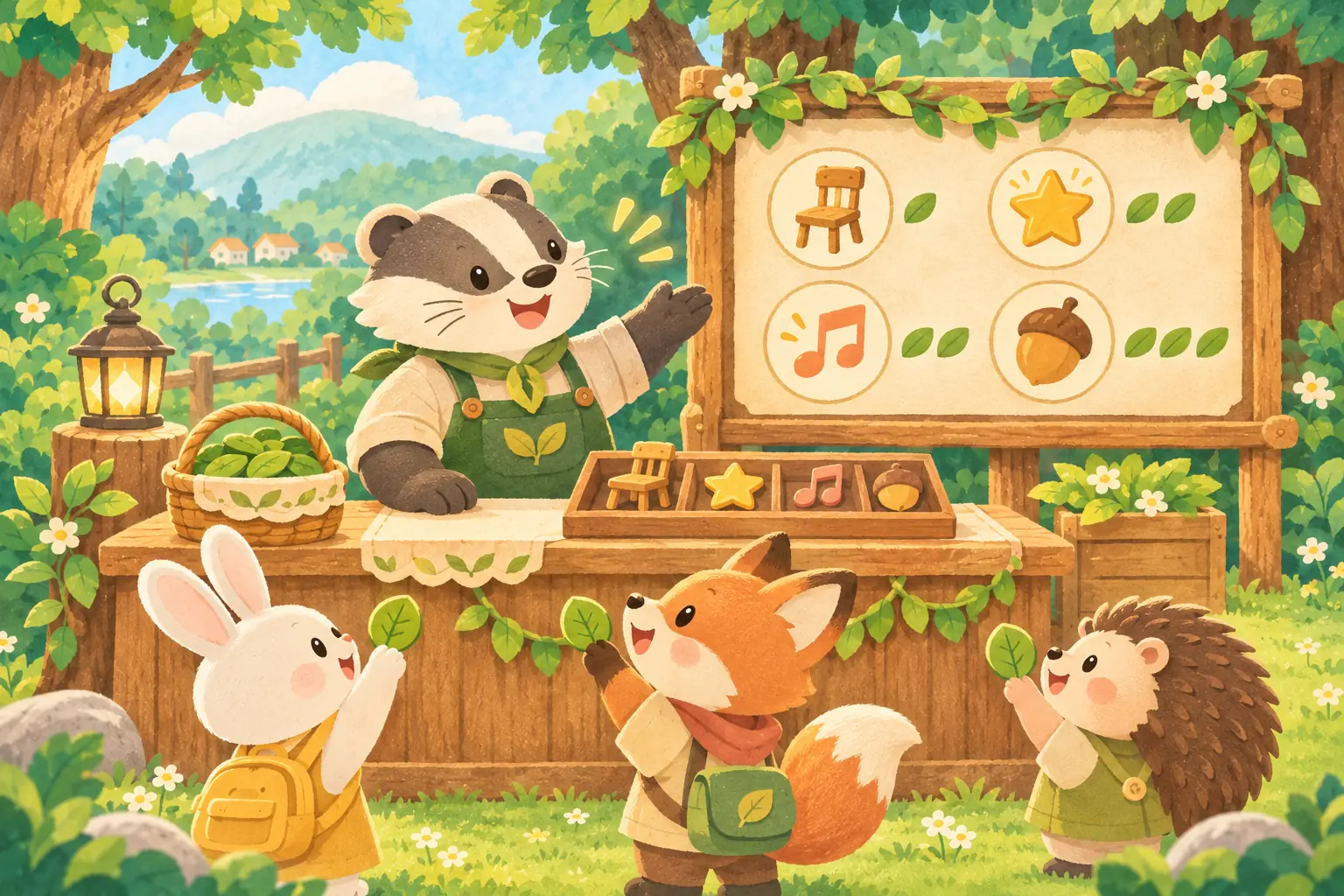
A sustainable classroom economy runs on predictable daily point values, three clear pricing tiers of zero-cost privileges, and a Friday checkout routine that takes five minutes or less. When you replace dollar-bin treasure boxes and paper-money counting with structured autonomy perks, you keep all 25 to 30 students invested from September through June without spending your own paycheck.
Below you will find the research behind why token systems stall in October, a simple three-tier pricing formula, 36 free K-6 privilege and mystery-draw ideas sorted by grade band, and a dual-track setup so spending points never resets a child's hard-earned growth level.
Why Most Classroom Economy Systems Collapse by October
When a classroom economy quietly disappears before fall conferences, it is rarely because elementary students stopped caring about rewards. Almost always, the teacher's daily maintenance load outgrew the minutes available in a school week.
Systematic reviews of classroom token economies by Soares et al. (2016) in School Psychology Review and Maggin et al. (2011) in Journal of School Psychology highlight three conditions that make token reinforcement effective: clearly defined target behaviors, consistent token delivery, and a predictable backup exchange schedule. In real K-6 homerooms, three traps routinely break that loop:
- Treasure-box budget and restocking burnout: Filling plastic bins with stickers, scented erasers, and candy for 28 kids every two weeks adds up fast out of pocket. Worse, sugary treats run into district wellness and allergy rules, while mini toys turn into math-block fidget distractions five minutes after checkout.
- Runaway point inflation: In Week 1, a quiet transition earns 1 point. By Week 3, an exhausted afternoon prompt offers "10 bonus points to whichever table cleans up first!" Overnight, 20-point coupons lose their meaning, top earners buy everything in sight, and quieter students watching from behind stop trying.
- Friday paper-money bottlenecks: Cutting paper bills, replacing lost zip-top wallets, and making change for twenty-eight indecisive shoppers at your kidney table eats recess and planning time. Skip store day twice during benchmark testing, and students stop trusting the currency.
If you are still deciding how to log daily points quickly during instruction, compare low-friction options in our guide to ClassDojo alternatives for calmer classrooms before locking in your store prices.
The 3-Tier Pricing Formula for a Sustainable Reward Store
To prevent inflation, anchor every price to what a steady, cooperative student earns in one five-day week. Suppose specific positive actions earn +1 point (with +2 points reserved for extra effort like thorough assignment revisions), and an average student earns 2 to 3 points per day—roughly 10 to 15 points per week.
Using 12 points per week as your baseline, divide your reward menu into three tiers so students who need quick reinforcement and students who love saving for big milestones both have a clear target:
| Store Tier | Suggested Point Price | Zero-Cost Privilege Examples | Target Redemption Pace |
|---|---|---|---|
| Tier 1: Quick Wins | 8–12 pts (~1 week of effort) | Fancy teacher stamp on planner, borrow a special gel pen for one block, pick recess ball first | Weekly, so hesitant learners earn a win by Week 2 |
| Tier 2: Autonomy & Status | 25–35 pts (~2–3 weeks of effort) | Sit with a friend for a day, DJ two clean-up songs, read in the cozy book nook during morning work | Every 2–3 weeks; the core everyday menu |
| Tier 3: Milestones & Mystery Draw | 50–60 pts (~half a quarter) | Spin a mystery capsule or scratch card, skip two repetitive practice problems, host a 10-minute Friday game | Mid-quarter and end-of-quarter savers |
36 Zero-Cost Classroom Privileges Kids Actually Work For
Elementary students care deeply about three things money cannot buy at a store: choice over their daily routine, trusted classroom status, and the suspense of a mystery surprise. Acknowledgment guidance from the Center on PBIS (2023) recommends emphasizing social and activity-based privileges over tangible trinkets because privileges build classroom community without ongoing supply costs.
What thrills a first grader makes a fifth grader roll their eyes, so tailor your menu to your grade band—and cross-reference helper perks with your regular classroom jobs and student leader list so daily duties and special VIP passes stay distinct:
| Privilege Category | Grades K-2 Ideas | Grades 3-4 Ideas | Grades 5-6 Ideas |
|---|---|---|---|
| Seating & Space Choice | Front-row cushion spot at read-aloud, keep class plush buddy on desk for one block, pick your spot in line | Swap seats with a consenting friend for a day, read in the library corner during bellwork, choose art partner | Free-choice seat pass for one day, first pick of lab table group, work at standing counter or clipboards |
| VIP Helper Status | Tap the projector timer button, hold the door for specials, pass out morning snack or folders | Projector & slides assistant for the day, lead morning stretch routine, whiteboard reset helper | Classroom DJ (pick two instrumental clean-up tracks), PE equipment captain, read a picture book to Grade 1 |
| Academic & Work Flex | Write spelling words in rainbow markers, custom doodle from teacher on folder, 2-minute Show & Tell | Cross off one row of mastered spelling practice, pick morning tub game, priority teacher check on revisions | "Skip 2 Review Items" pass on homework, choose your own journal prompt, 10-minute lunch chat with teacher |
| Group & Mystery Perks | Scratch off a mystery perk card, lead 3 minutes of Freeze Dance, pick the dismissal song | Draw a mystery capsule prize, earn 5 minutes of class riddles, first pick of research topic | Rare mystery capsule draw, pool points with 3 peers for 10 minutes of class Bingo, emcee Friday assembly |
When upper-elementary students pool points for a ten-minute whole-class game reward, launch the free browser Bingo card generator or Scoreboard with this week's vocabulary words or multiplication facts—delivering a celebration that doubles as effortless academic review.
Copy either block below straight into your digital shop, slides, or bulletin board poster:
TIER 1: QUICK WINS (10 Points Each)
1. Special teacher stamp or doodle in your take-home folder
2. First pick from the new classroom library book bin
3. Official Countdown Timer & Name Spinner button presser today
4. Use the special flair pens or markers during writing block
5. Caboose or Line Leader VIP pass for dismissal today
6. Positive brag note written by the teacher for your family

TIER 2: AUTONOMY & STATUS PASSES (25 Points Each)
7. Friend Desk Swap Pass for 1 day (both students agree & stay on task)
8. Clean-Up DJ: choose 2 classroom-approved instrumental songs
9. Read in the cozy rug corner for 20 minutes during independent reading
10. Classroom Tech & Projector Assistant for the day
11. 2-Minute Spotlight: share a drawing, book, or hobby at Morning Meeting
12. Choose the brain-break or warm-up game before afternoon block

TIER 3: MILESTONE & MYSTERY REWARDS (50 Points Each)
13. Mystery Capsule / Scratch Card Draw (guaranteed prize!)
14. "Cross Off 2" Pass on any mastered practice sheet (excludes fix-it revisions)
15. Invite 2 friends for a quiet 15-minute Friday board game at lunch
16. Pool with 3 classmates to unlock a 10-minute Friday whole-class review game
17. Co-host Friday Morning Meeting or monthly birthday celebration
18. Priority Seat-Pick Pass during next month's seating chart rotation
COMMON DROPS (High frequency — instant smiles)
- Lucky Rebate: Get 5 points right back PLUS a folder stamp!
- Clean-Up DJ: You pick tomorrow's afternoon pack-up song.
- VIP Book Pass: Check out one extra graphic novel from the class bin this week.
- Fast-Track Check: Skip the line once this week when getting work checked.
- Rainbow Ink: Complete tomorrow's journal entry in any pen color you like.
- Sunshine Note: Teacher writes a specific praise postcard for you to take home.

UNCOMMON DROPS (Medium frequency — table cheers)
- Bestie Desk Swap: Sit beside a consenting friend tomorrow during homeroom.
- Teacher Chair VIP: Read in the comfy rolling chair during tomorrow's 10-minute read-to-self.
- Wheel Master: You tap the Random Name Picker on the board all day tomorrow!
- Odd-or-Even Pass: Do only the odd-numbered items on one practice page this week.

RARE LEGENDARY DROPS (Low frequency — semester legends)
- Class Hero: You just unlocked 8 minutes of Guess the Number or Bingo for the whole class on Friday!
- Double Draw: Spin a second mystery capsule right now for free—keep both perks!
How to Run Reward Store Checkout in 5 Minutes Every Friday
Even the best reward menu collapses if checkout eats twenty minutes of instructional time. Separate "window shopping" from "logging redemptions" and serve half the roster per week so thirty students wrap up in under five minutes:
- Preview on Thursday at pack-up: Point to the wall menu on Thursday afternoon and remind tomorrow's shoppers to pick their item number (#1–#18) ahead of time. Anyone still deciding at the desk steps to the back of the line for thirty seconds.
- Alternate odd and even student numbers: Odd Fridays serve student numbers 1, 3, 5...; even Fridays serve 2, 4, 6.... Cutting the line to twelve or fifteen students guarantees checkout finishes before buses are called.
- Log on Friday, fulfill on Monday: On Friday, simply deduct points and mark the reward as pending—never rearrange desks or hunt for playlists mid-checkout. Activate all seat swaps, helper badges, and homework passes together during Monday morning homeroom.
 Free toolsCountdown timerPut a 5-minute full-screen countdown on the board when checkout opens so students state their item number briskly and watch the clock themselves.Open the tool
 Free toolsRandom name pickerIf four students want the same one-per-day Clean-Up DJ pass on Monday, spin their numbers openly in five seconds so nobody argues over who asked first.Open the tool
Separate Growth Milestones from Spendable Points So Progress Never Resets
Traditional point banks hide a subtle motivation trap: a quiet third grader works for three weeks to reach 30 points and unlock a top rank, spends 25 points on a Friend Desk Pass, and watches their visible rank drop back to 5. Cautious kids start hoarding points out of fear of "shrinking," while impulsive spenders feel like a month of effort vanished overnight.
In their landmark review of Self-Determination Theory in Contemporary Educational Psychology, Ryan and Deci (2000) explain that external rewards support long-term motivation only when they affirm competence—a student's visible sense of growing mastery—rather than feeling controlling or punitive. Merging "how far I have grown" and "how many tokens I have left to spend" into a single shrinking number accidentally erases that competence signal every time a student shops.
Use a two-track setup instead:
- On paper: Give each student a permanent Semester Milestone Map where every earned stamp stays visible through June. Every tenth stamp unlocks a 10-point store voucher checked off in the margin—nothing is ever erased or taken back.
- Digitally: Choose a tracker that separates cumulative growth levels from spendable store balance. Every positive point advances the student's companion toward its next evolution while simultaneously adding a spendable token to their wallet; redeeming a store perk or mystery capsule deducts only spendable points, so their companion never shrinks or downgrades.
FAQ
How do I run a classroom economy without students asking 'Do I get a point?' all day?
Pair points with specific behavioral feedback first—name what the student did and how it helped the room, then add a predictable +1 or +2. Once a routine like lining up is automatic, fade points on that skill to verbal praise and shift points toward newer academic or teamwork habits.
Will elementary students actually work for free privileges instead of candy or toys?
Yes. Across grades K-6, autonomy and social status hold far longer appeal than plastic erasers that break before dismissal. Sitting with a friend for a day, choosing the clean-up song, being tech helper, or drawing a mystery coupon costs $0, avoids food allergy issues, and creates zero desk clutter.
What if high-scoring students buy out the store while struggling kids give up?
Keep Tier 1 privileges affordable at 8 to 12 points—roughly one week of steady daily habits—so every student experiences an early win by Week 2. Add higher 50-point milestone experiences or pooled whole-class goals so fast earners have something meaningful to save toward.
How can I manage Friday reward store checkout without losing my prep period?
Split browsing from checkout and alternate odd and even student numbers every Friday. Have students pick their reward number from a wall poster on Thursday afternoon, run a five-minute countdown timer for half the roster on Friday, and fulfill all redeemed passes together on Monday morning.
Should I use paper classroom bucks, punch cards, or a digital reward store?
Kindergarten and first grade often benefit from tactile ten-spot punch cards during the first month of school so students see concrete quantity. From second grade up, tracking points on the projector and redeeming inside a digital shop eliminates counterfeit paper cash, lost baggies, and manual Friday bookkeeping.
Sources
- Effect Size for Token Economy Use in Contemporary Classroom Settings: A Meta-Analysis of Single-Case ResearchSchool Psychology Review2016
- A systematic evaluation of token economies as a classroom management tool for students with challenging behaviorJournal of School Psychology2011
- Intrinsic and Extrinsic Motivations: Classic Definitions and New DirectionsContemporary Educational Psychology2000
- School-Wide Positive Behavioral Interventions and Supports: Acknowledgement SystemsCenter on PBIS2023