 ClassMori
Teaching articles
Desk Pets in the Classroom: Eraser Pets vs Virtual Class Pets Guide
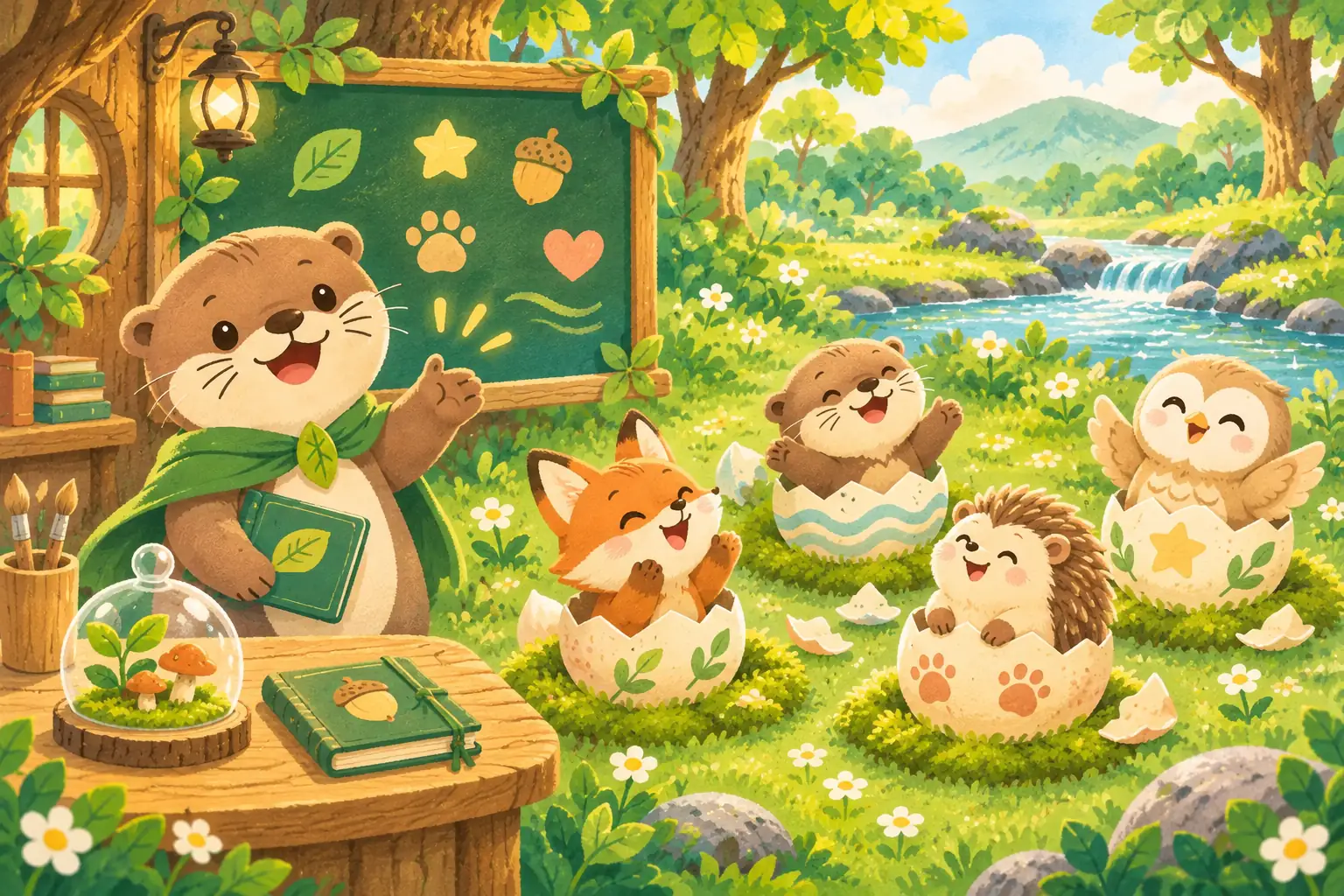
Classroom desk pets keep K-6 students excited about daily routines when you either set strict "pet parking" boundaries for mini erasers or run clutter-free virtual individual pets on your projector. Compare live classroom animals, physical eraser habitats, and zero-cost digital companions below—complete with a copyable 5-line Adoption Pledge, anti-distraction rules, and a five-minute Friday showcase routine.
Turning abstract behavior points into a named little creature that hatches and grows taps into a powerful nurturing instinct. Yet browse any elementary teacher forum in October and you will see the flip side: thirty tiny animal erasers rolling across the floor during fractions, missing penguins sparking tears after recess, or $60 spent out of pocket on plastic dome houses. Knowing the tradeoffs up front saves both your budget and your instructional flow.
Why Desk Pets Took Over Elementary Classrooms (and 4 Real Headaches)
Caring for a classroom companion turns dry procedural reminders into a mission kids genuinely want to complete. Tracking 591 third- and fourth-grade students across 41 classrooms in 19 U.S. elementary schools over a full school year, McCullough, Ruehrdanz, and Garthe (2021) reported in Human-Animal Interaction Bulletin that teachers and parents rated students in pet classrooms higher in social skills, prosocial behavior, and reading competence—with fewer hyperactivity and inattention behaviors—than control classrooms, while noting that student self-ratings did not differ significantly, underscoring how much teacher structure shapes the outcome.
At the same time, a systematic review of 25 school animal studies by Brelsford, Meints, and Gee (2017) pointed out serious practical hurdles around student allergies, zoonotic hygiene, and weekend animal welfare. That gap fueled the viral wave of mini-eraser desk pets (3D food-and-animal puzzle erasers housed in condiment cups or cardstock habitats) alongside virtual class pets: teachers wanted the emotional warmth of nurturing a buddy without cleaning cages over Thanksgiving break.
Still, homeroom teachers who launch physical eraser desk pets without guardrails routinely hit four walls by Week 3:
- Out-of-pocket supply creep: Buying bulk 3D erasers, clear plastic domes, mini pom-pom "food," and replacement parts for 28 students quickly runs $40 to $80.
- Fidgeting during core instruction: Park a cute rubber axolotl on the corner of a second grader's desk, and ten minutes into phonics its head and hat are being taken apart under the table.
- Lost, traded, or "kidnapped" erasers: Tiny parts fall out of backpacks, roll into neighboring cubbies, or get traded unevenly on the bus, eating fifteen minutes of morning arrival detective work.
- Sanitation and desk-crumb buildup: Cardstock houses tear, eraser shavings coat pencil boxes, and shared plastic accessories become germ magnets during winter flu season.
Live Animals vs Eraser Desk Pets vs Virtual Individual Pets
None of the three approaches is universally wrong—the right pick depends on whether your priority this year is life-science observation, hands-on K-2 crafting, or a zero-budget habit loop that runs cleanly from August to June.
| Classroom Pet Format | Cost, Prep & Hygiene | Mid-Lesson Distraction Risk | Semester-Long Staying Power |
|---|---|---|---|
| Live Classroom Animal (fish tank, insects) | Tank, filter, food budget; allergy checks and holiday host families required | Low to Moderate (stays at a back science table, off student desks) | High for life-science empathy, though illness or loss requires sensitive guidance |
| Mini-Eraser Desk Pets | Teacher buys erasers and domes; cubby clutter and winter sanitizing needed | High (tiny toys sit within arm's reach during math and writing blocks) | Sky-high in Weeks 1–3; fades mid-semester unless new accessories are bought |
| Virtual Individual Pets (projector-based) | $0 supplies, zero cleanup; runs on classroom screen with zero student logins | Very Low (companions live in the projector Pet Forest; desks stay clear) | Steady all year via mystery eggs and multi-stage evolutions (Lv.1 to Lv.30) |
Many K-2 teachers blend the best of both worlds: run projector-based virtual individual pets Monday through Friday so desks hold only pencils and notebooks, then gift each student a matching $0.50 animal eraser or printed certificate at the end of the semester to take home for summer—zero daily toy battles required.
3 Non-Negotiable Habitat Rules So Desk Pets Never Hijack Math
Whether your students adopt physical mini erasers or digital woodland creatures, frame the ground rules before the very first egg hatches so companions reinforce focus rather than compete with it:
- Establish strict "Pet Hotel / Den Hours": Physical desk pets stay parked in a numbered back-counter pocket chart or "Pet Condo" during direct instruction, emerging only during morning bellwork check-in, indoor recess, or Friday celebration blocks. Likewise, project your digital Pet Forest during arrival, quick point moments, and pack-up—then switch cleanly back to your teaching slides.
- Feed pets with observable habits—never confiscate or "evict" an earned pet: Threatening to throw away or give away a child's desk pet triggers panic and resentment. If a student plays with an eraser mid-lesson, calmly say, "Looks like your buddy is sleepy—let's tuck it into the Pet Hotel until tomorrow morning." Channel energy into positive earning instead, such as holding Table Voice Level 2 from our classroom noise monitor and voice level guide.
- Enforce a "Stays at School, Zero Trading" rule for physical pets: Tell students and families on Day 1 that physical desk pets live at school Monday through Friday until the last week of the semester, and peer-to-peer trading is off-limits. That single rule eliminates 90% of playground disputes.
Copy and print these five lines onto quarter-sheet Adoption Certificates for students to sign and tape inside their take-home folders:
OUR CLASSROOM COMPANION ADOPTION PLEDGE
1. I will give my companion a kind, school-appropriate name and take proud care of it.
2. When the lesson chime rings, my companion rests safely in its den so my hands and eyes are ready to learn.
3. I know that turning in work, keeping calm table voices, and helping classmates are how my companion grows stronger.
4. I will treat every classmate's companion with kindness—no touching without permission, no trading, and no teasing.
5. If I have a tough moment, I won't give up; I can reset on the very next block and keep helping my companion grow!
Caretaker Signature: __________________   Adoption Date: ____________
Individual Pet Evolution: Motivating Quiet Kids Without Peer Blame
Whole-class shared mascots sound unifying on paper, yet homeroom teachers often run into two fairness snags by October: group resentment when two impulsive students lose points for the entire class, and invisible middle students whose quiet, dependable habits get overshadowed by the loudest hand-raisers.
Switching to an individual 1-pet-per-student model gathered in one shared forest solves both problems at once. Self-Determination Theory research shows sustained motivation thrives when classrooms support competence, autonomy, and relatedness together (Ryan & Deci, 2000), and Sailer and Homner's (2020) meta-analysis in Educational Psychology Review confirms that gamified learning environments yield positive effects on both motivation (g = .36) and behavioral outcomes (g = .25), especially when clear individual progress pairs with non-punitive social belonging.
Four design details keep an individual virtual pet loop humming past winter break—especially if you are weighing calmer ClassDojo alternatives or pairing pets with a zero-budget classroom economy:
- Fast early hatching builds Day-1 confidence: Every student starts at a Lv.0 egg/den with +2 starter points so steady morning routines hatch their Lv.1 baby companion within the first few lessons—nobody sits staring at an unhatched egg for three weeks.
- Four surprise evolution stages hook older grades: Companions evolve into brand-new visual forms at Lv.1, Lv.10, Lv.20, and Lv.30 (and earn stars beyond Lv.30). Fourth and fifth graders quietly calculate how many specific habits they need before Friday to reveal their next form.
- Individual progress, shared Pet Forest community: A classmate's rough morning never deducts from anyone else's companion, yet opening the projector view brings all 25 to 40 land, sea, and woodland pets strolling together in one lively Pet Forest—and lets you spotlight a four-student table group side by side.
- Spending store points never shrinks a pet: When a student trades points in the Reward Shop for a seat swap or mystery scratch card, only spendable tokens decrease—their pet's evolution level stays 100% intact.
Want families to celebrate their child's companion at home without opening two-way evening parent chat? On the Plus plan, printable read-only student links let parents scan a private QR card in their child's folder to view only their own child's pet and positive behavior log—no student logins, no parent app download, and resettable anytime.
A 5-Minute Friday Pet Forest Showcase Routine
A pet system fades if you mention it once in September, yet checking pets for ten minutes every period eats math time. Hit the sweet spot: two-second positive taps during weekday lessons, plus a structured 5-minute Pet Forest Showcase before Friday pack-up.
- Minute 1 — Open the whole-class Pet Forest: Set the full-screen countdown timer for 5 minutes, project the Pet Forest, and name one concrete habit the whole class improved this week (or tally table challenge points on the scoreboard).
- Minutes 2 to 4 — Spin 5 Caretakers with no repeats: Spin five student numbers so every child gets a turn across a six-week cycle. Right from their seat, each student shares one sentence: "My little otter leveled up this week because I checked off my math revisions every morning." Add a quick teacher nod and a three-clap cheer.
- Minute 5 — Set next week's micro-goal: Preview one simple focus for Monday—such as helping the last two eggs hatch by hitting Level 0 hallway lines—and dismiss right on the bell.
 Free toolsRandom name pickerSpin student numbers 1 to 30 with automatic no-repeat tracking so every quiet caretaker gets spotlighted fairly across Friday showcases without typing a single name.Open the tool
Paste this note into your Back-to-School Night slides or weekly newsletter so families know exactly how to ask about their child's companion at the dinner table:
Hello Families,
This year our class is using an individual Woodland Companion board on our projector to celebrate positive daily habits! Each student has adopted their own virtual forest pet that hatches from an egg and evolves as they practice concrete skills—like morning readiness, respectful listening, steady table teamwork, and completing homework revisions.

Three quick things to know:
1. Desks stay toy-free and screen-free: students do not create online accounts, log in on devices, or bring toys from home.
2. Every child's companion grows at its own pace—there are no public rankings, and pets are never taken away as a punishment.
3. Dinner-table conversation starter: ask your child this week, "What species hatched from your egg, what did you name it, and what habit helped it grow today?" Thank you for cheering on their everyday effort!
FAQ
Are live classroom pets safe and practical in elementary schools?
Live animals can enrich science units when districts permit them, but teachers must screen for student asthma and dander allergies and arrange holiday care. Health agencies advise against reptiles and amphibians such as turtles or geckos in young classrooms due to Salmonella risks, while nocturnal hamsters often become stressed in noisy rooms.
What are the best rules so mini-eraser desk pets do not turn into math-block toys?
Have students sign a 5-line Adoption Pledge before handing out erasers, keep pets parked in a back-counter 'Pet Hotel' during core instruction, and limit desk visits to morning check-in or Friday reward blocks. If a student fiddles with a pet mid-lesson, calmly send the pet to nap in the hotel rather than taking it away permanently.
Do 3rd, 4th, and 5th graders still care about desk pets or virtual pets?
Yes—what changes is the hook. Grades K-2 love naming baby animals and decorating paper houses, while Grades 3-6 get hooked on mysterious multi-stage evolutions (Lv.1 to Lv.30) and collecting rare species. Tying growth points to upper-elementary habits like lab cleanup and assignment revisions keeps engagement high.
If one student acts out or misses school, does it hurt classmates' virtual pets?
Not in an individual 1-pet-per-student system. Each child's companion grows strictly from their own positive habits, so absences never deduct points and one impulsive moment never drags down a tablemate. All pets still gather side by side in the shared Pet Forest on the projector for community spirit.
If students spend points in a classroom store, will their virtual pet shrink?
In a dual-track system like ClassMori, pet evolution progress and spendable store tokens are tracked separately. When a student redeems 25 points for a Friend Seat Swap or mystery capsule, only their spendable wallet drops—their companion keeps every level and evolved form.
Sources
- Measuring the Social, Behavioral, and Academic Effects of Classroom Pets on Third and Fourth-Grade StudentsHuman-Animal Interaction Bulletin2021
- Animal-Assisted Interventions in the Classroom—A Systematic ReviewInternational Journal of Environmental Research and Public Health2017
- The Gamification of Learning: a Meta-analysisEducational Psychology Review2020
- Intrinsic and Extrinsic Motivations: Classic Definitions and New DirectionsContemporary Educational Psychology2000