 ClassMori
Teaching articles
60 Elementary Narrative Writing Prompts, Story Mountain & 5-Sense Guide
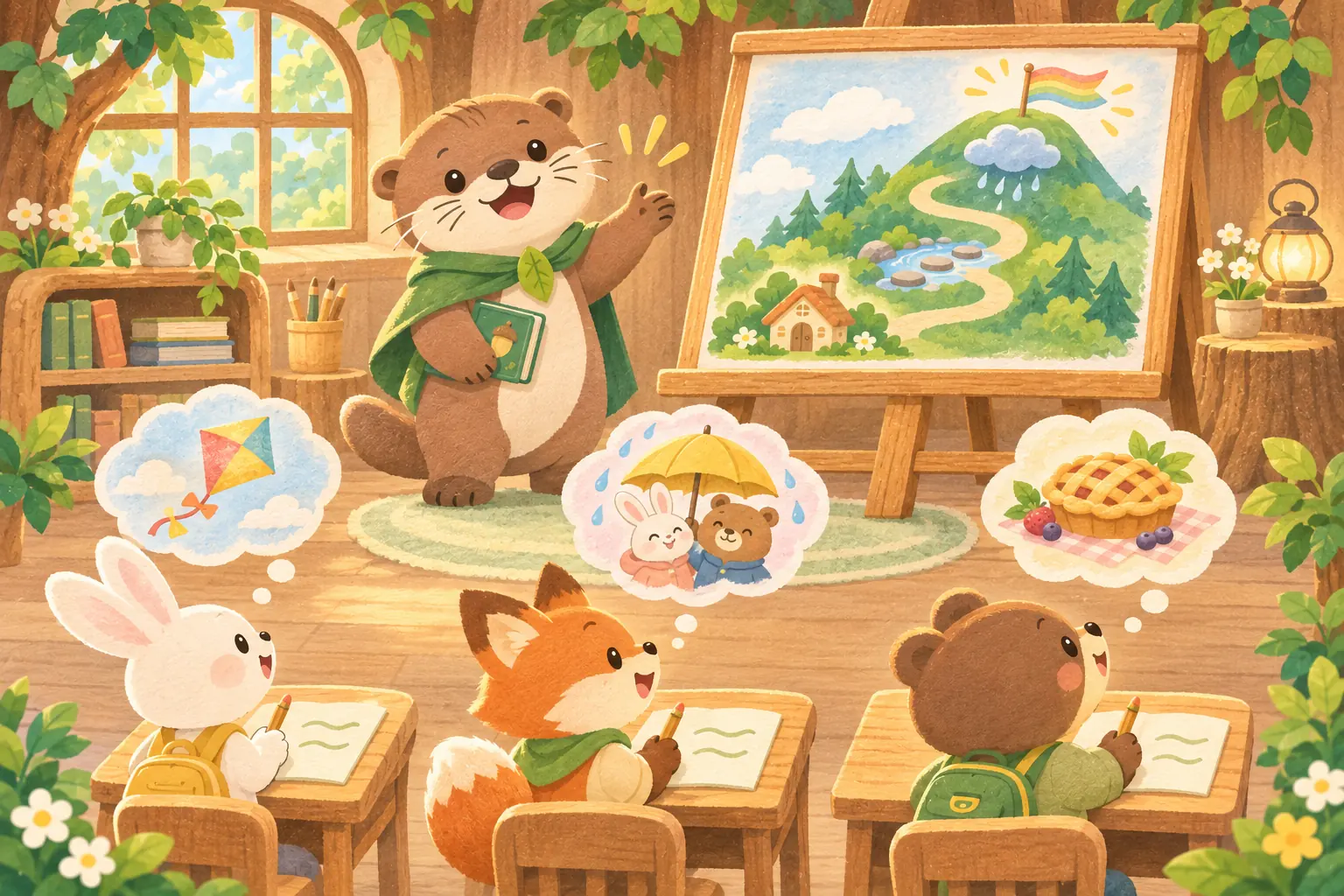
Even the best elementary narrative writing prompts fall flat if students grab lined paper immediately and write a "bed-to-bed" list from waking up at 7:00 a.m. to going to sleep ("...and it was the best day ever"). When you spend the first fifteen minutes sketching a Four-Part Story Mountain, snip off the morning-routine preamble, and zoom a five-sense magnifying glass onto one unforgettable ten-minute moment, hesitant writers suddenly know exactly where to start and what to stretch.
Aligned with Grades 1–6 narrative writing standards, this guide gives you a line-by-line paragraph budget, six Show-Don't-Tell slow-motion makeovers, five opening and ending upgrades, 60 small-moment narrative writing prompts with three board questions each, and an 80-minute workshop pacing plan.
Stop Bed-to-Bed Stories: The 15-Minute Four-Part Story Mountain
The fastest cure for flat chronological lists is showing students visually that four paragraphs are never equal in length—Stage 3 at the summit carries nearly half of the entire story. Meta-analyses of elementary writing instruction demonstrate that explicitly teaching pre-writing planning, text structure, and Self-Regulated Strategy Development (SRSD) produces large, lasting gains in story quality (Graham et al., 2012; Harris, Graham, & Mason, 2006).
If you teach Grade 1 or early Grade 2 writers who are still transitioning from oral storytelling into connected sentences, warm up first with the 4-panel visual scaffolds in our picture writing prompts guide. For Grades 2–6 writers working on standard 20-line composition paper, mapping the four stages of the Story Mountain directly to line counts stops students from spending twelve lines riding the school bus and only one line at the museum:
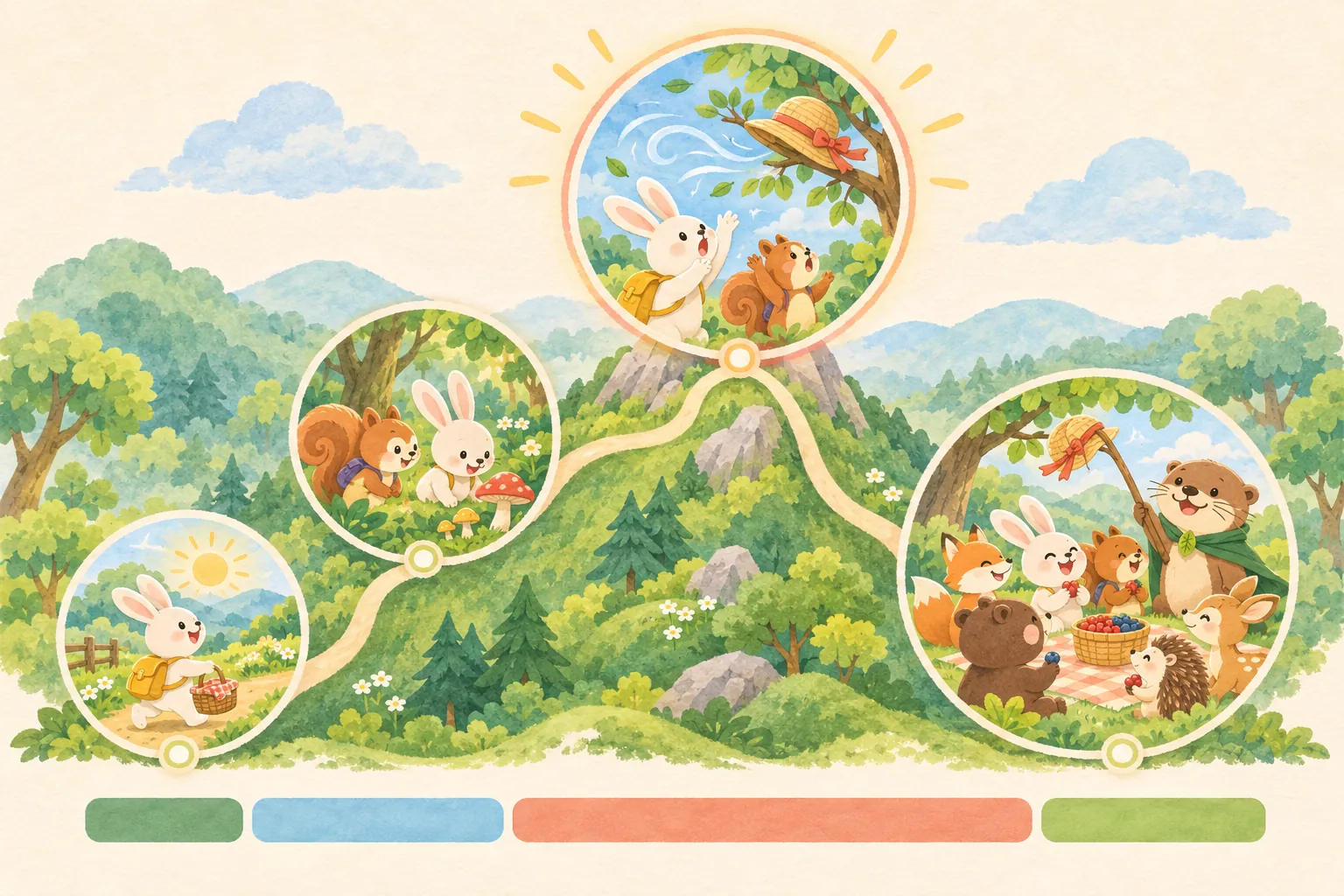
| Story Mountain Stage | Target Line Budget (20-Line Page) | Core Job of This Paragraph | Classic Bed-to-Bed Trap & Instant Fix |
|---|---|---|---|
| Stage 1: Basecamp Launch | 2–3 lines (~30–45 words) | Drop the reader straight into the setting with 1 action, sound, or line of dialogue | Trap: Alarm clock -> brushing teeth -> bus ride. Fix: Start the second feet step onto the gym floor or trail! |
| Stage 2: Climbing Setup | 4–5 lines (~60–75 words) | Show what you hoped would happen and the calm setup right before the twist | Trap: Listing every exhibit ("First A, then B, then C"). Fix: Keep only the 1 detail that sets up the summit snag. |
| Stage 3: Summit Turning Point | 8–9 lines (~120–150 words) | Stretch the problem, surprise, or toughest 10 seconds with 3 actions + dialogue | Trap: "Then we tried hard and won." Fix: Slow-motion replay of hands, heartbeat, and spoken words. |
| Stage 4: Trailhead Landing | 3–4 lines (~45–60 words) | Show how the moment wrapped up and one small shift in how you think or act now | Trap: "It was a fun day I will never forget!" Fix: Echo an image from Paragraph 1 or show one quiet action. |
Before passing out composition paper, ask students to fold a sticky note or scratch half-sheet into four boxes and jot no more than 30 keywords total:
Story Title: ____________________________
[Box 1 · Basecamp Launch (2–3 lines)] Drop right into the scene—Where are you & what is the first sound or action? (Zero breakfast/bus!): ____________
[Box 2 · Climbing Setup (4–5 lines)] How did things start out, and what were you hoping or expecting?: ____________
[Box 3 · Summit Twist (8–9 lines)] What went wrong, surprised you, or felt hardest? List 3 tiny actions + 1 spoken line: ____________
[Box 4 · Trailhead Landing (3–4 lines)] How did the moment end, and what did you realize or do differently after?: ____________
Turning 'I Felt Happy' Into Vivid Action: The Five-Sense Magnifying Glass
When a third grader's Stage-3 climax ends in two lines, the culprit is almost always telling labels: *"I was really nervous," "The noodles were delicious," "Everyone was so excited."* Launch a playful classroom "No-Label Challenge": whenever a writer catches themselves about to write *happy, sad, mad, scared, nervous,* or *good*, they hold an imaginary Five-Sense Magnifying Glass over those ten seconds and unpack three physical micro-actions plus one inner thought. To build richer sentence-level craft alongside narrative drafting, pair this mini-lesson with the four-step pyramid in our sentence expanding and idioms guide.
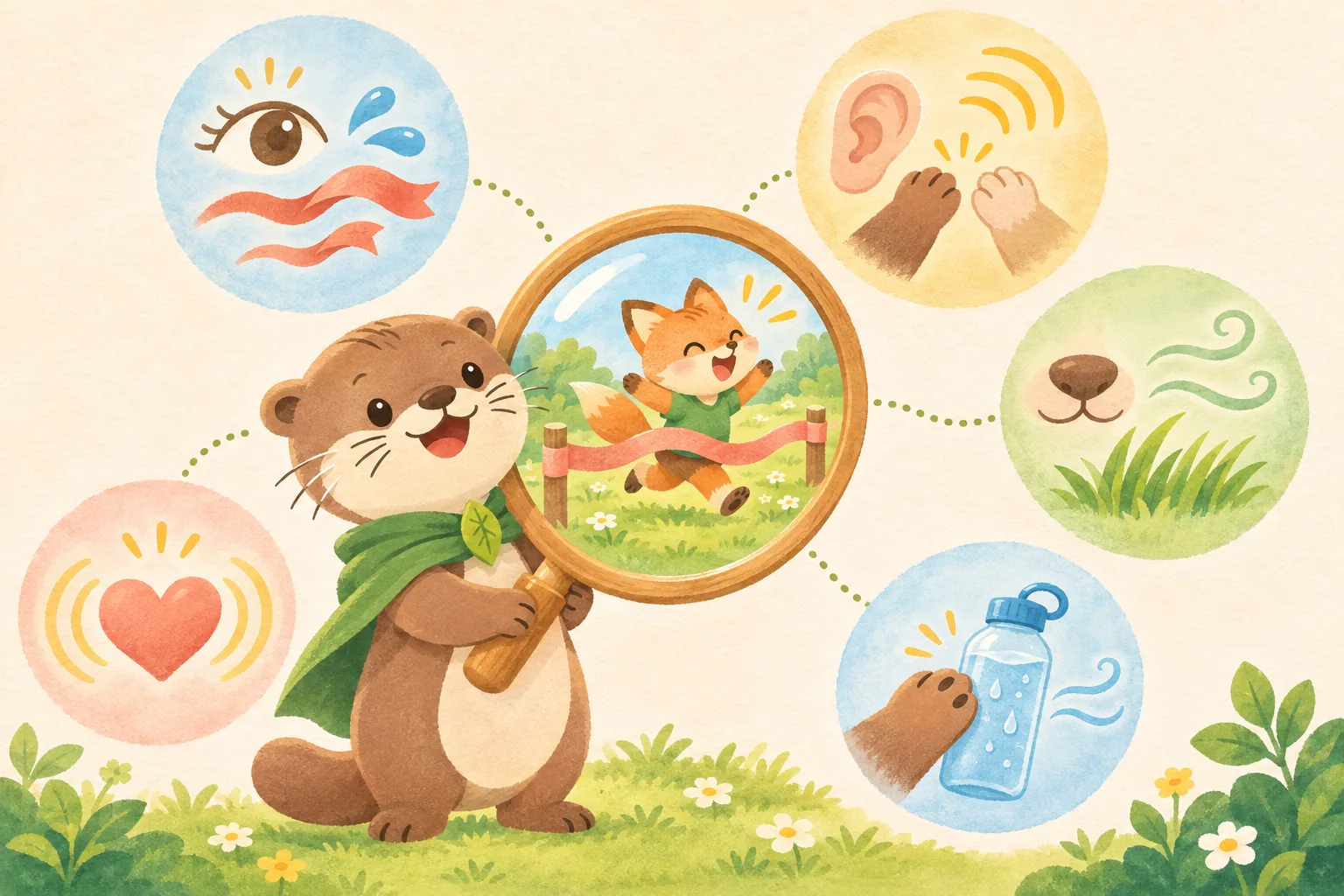
Project these six real elementary "before and after" makeovers so students see exactly how slow-motion detail works:
| Flat Student Draft ("Telling") | Teacher's 5-Sense Question | 3-Frame Slow-Motion Breakdown | Elementary "Showing" Makeover |
|---|---|---|---|
| I was really nervous. | What did your palms do? What did your chest feel like? | Grip paper -> swallow hard -> hear name called | My damp palms crinkled the edges of my index card as my heart drummed against my ribs like a trapped woodpecker. |
| We were super happy. | What did your feet and mouths do in that exact second? | Freeze wide-eyed -> leap up -> high-five & squint-laugh | As the soccer ball kissed the back net, Leo and I gasped, sprang off the bench, and slapped a two-handed high-five until our palms stung. |
| The soup was really good. | What rose off the bowl? What did the first spoonful taste like? | Sniff steam -> blow gently -> taste warm broth | Curls of savory garlic steam fogged my glasses; I blew twice across my spoon and sipped rich golden broth that warmed me down to my toes. |
| I got very mad. | What happened to your cheeks, jaw, and fingers? | Hot cheeks -> press lips -> grip marker tight | Seeing muddy footprints across my wet poster, heat rushed up my ears and my fingers squeezed the blue marker until my knuckles turned white. |
| It was freezing outside. | What did the wind sound like, and what did your breath do? | Zip coat to chin -> puff white clouds -> stamp boots | January wind whistled through the chain-link fence, turning every breath into white dragon puffs while I stamped my boots to wake up my toes. |
| That made me feel thankful. | What tiny motion did your friend make? | Notice quiet gesture -> blink hard -> whisper thanks | Without saying a word, Maya tilted her yellow umbrella over my soaked backpack, leaving her own jacket sleeve in the drizzle. |
Tape this pocket prompt slip inside the front cover of students' writer's notebooks:
1. [EYES] What exact expression was on their eyebrows or mouth? What tiny motion did their hands make?
2. [EARS] What was the loudest sound in the room—or was it so quiet you could hear the wall clock ticking?
3. [NOSE & TASTE] What did the air smell like (rain on pavement, sharpened cedar pencils, cinnamon toast)?
4. [TOUCH] Were your palms sweaty, your knees wobbly, the metal bleachers icy, or your backpack straps heavy?
5. [INNER VOICE] In that exact second, what silent sentence flashed inside your head? (I thought to myself, "...")
Ditching 'One Sunny Day': 5 Story Leads and 5 Endings Side by Side
Telling kids *"Don't start with 'One sunny Saturday'"* without handing them concrete alternatives leaves them stuck on Line 1. Give writers a menu of five Story Leads and five Story Landings and ask everyone to star one technique at the top of today's draft.
5 Engaging Narrative Leads
| Lead Strategy | Best Story Fit | Typical Flat Opening | Zoomed-In Classroom Makeover |
|---|---|---|---|
| 1. Sound-Effect Hook | Sports, storms, performances, mishaps | Today it was Field Day at our school and everyone was excited for the relay. | *Tweeeeet!* Coach Rivera's silver whistle sliced across the blacktop as six sneakers exploded off the chalk line. |
| 2. Spoken-Line Launch | Friendships, family moments, forgotten gear | On Wednesday morning I went to music class and realized I forgot my recorder. | "Take out your recorders and rest them on your knees," Mr. Kim smiled—and my stomach dropped straight to my sneakers. My recorder was sitting on the kitchen counter. |
| 3. Object Close-Up | Keepsakes, gifts, grandparents, memories | I have an old blue tin box in my desk that my grandma gave me in second grade. | Tucked in the back corner of my bottom drawer sits a dented blue biscuit tin whose lid still clicks open with a soft *pop*. |
| 4. Flashback Contrast | Learning a tough skill, facing a fear | Last summer my dad took me to the pool to learn how to swim in the deep end. | Staring at the five dolphin stamps on my swim card today, it is wild to remember that eight weeks ago I wouldn't dip my chin underwater. |
| 5. Before-I-Tried-It Shift | Classroom jobs, empathy, new perspectives | This quarter I got picked to be the classroom librarian and it is hard work. | Sitting on the rug, I always thought being Class Librarian meant holding the scanner for two easy minutes—until Monday's mountain of forty tangled picture books. |
5 Resonant Narrative Endings
Great endings skip preachy morals (*"And that's why you should always share!"*) and land on one grounded image, quiet action, or spoken line. When teaching family-memory narratives in May, connect these specific small-action endings directly to our Mother's Day card ideas and caregiver appreciation lesson so students write heartfelt stories instead of generic greeting-card clichés.
| Ending Strategy | Best Story Fit | Preachy or Cliché Ending | Grounded Classroom Makeover |
|---|---|---|---|
| 1. Circle-Back Object | Keepsakes, family stories, lessons learned | Thank you Grandma for being so nice. I will love you forever! | I slid the dented blue tin gently back into my drawer; its quiet *click* felt just as steady as Grandma's pat on my hand. |
| 2. Freeze-Frame Snapshot | Trips, outdoor adventures, teamwork | We had so much fun hiking and I hope we go again next year! | Late-afternoon sun stretched our three long shadows down the trail, and nobody was in a hurry to reach the parking lot. |
| 3. Changed-My-Mind Insight | Losing a game, clearing up a mix-up | Even though we lost, I learned teamwork is super important. | Losing the tug-of-war ribbon didn't sting nearly as much as I expected; laughing in the grass together while brushing off mud felt even better. |
| 4. Quiet Next-Time Action | Apologies, family responsibilities | Mom works hard cooking so from now on I will be a helpful kid. | After swallowing my last bite of tacos, I pushed my sleeves past my elbows, carried our plates to the sink, and turned on the warm tap without being asked. |
| 5. Final Line of Dialogue | Recess conflicts, new friends, school life | Finally we became friends again and had a great afternoon. | As the bell rang, Sam nudged half of his clean pink eraser across our desk crack and whispered, "Want to be lab partners next period too?" |
60 Grade-Leveled Narrative Writing Prompts With 3 Zoom-In Questions
Broad prompts (*"Write about your school"*) paralyze elementary writers; small-moment prompts paired with three instant board questions launch pencils in under three minutes. Copy any of these 60 prompts straight onto your daily slide deck:
Category 1: School Days, Recess & Friendships (Prompts 01–15)
01. (Grades 1-3) Ten Wild Minutes at Recess | Zoom-In 3: Where did your feet head the second the doors opened? What unexpected twist happened mid-game? How did you feel walking back in line?
02. (Grades 1-3) The Cafeteria Tray Surprise | Zoom-In 3: What did you spot or smell in the lunch line today? What happened when you took the first bite or sat down? How did tablemates react?
03. (Grades 1-3) New-Seat Morning | Zoom-In 3: What were you hoping when the new seating chart went up? Who landed right beside you? What was the first thing the two of you shared or said?
04. (Grades 1-3) The Morning I Forgot Something Important | Zoom-In 3: At what exact moment did you unzip your backpack and freeze? What ran through your head? Who stepped in or how did you improvise?
05. (Grades 2-4) Waiting for the Field Day Baton | Zoom-In 3: How did your hands feel waiting in the exchange zone? What surprise happened on the curve or handoff? What did your class do at the finish line?
06. (Grades 2-4) Classroom Cleanup Mishap | Zoom-In 3: Which messy corner or spilled supply bin was your job? What went sideways halfway through? How did your crew get the room sparkling before the bell?
07. (Grades 3-5) Three Minutes at the Front of the Room | Zoom-In 3: How did your legs feel walking up to present? Where did you stumble or pause looking at 28 faces? Which small nod or smile helped you finish strong?
08. (Grades 3-5) Caught in a Dismissal Downpour | Zoom-In 3: How loud was the rain hitting the walkway roof? What happened under a shared umbrella or soaked hood? What felt warmest once you got inside?
09. (Grades 3-5) One Unforgettable Stop on Our Field Trip | Zoom-In 3: Skip the bus ride—which exact exhibit or trail spot are we standing in? What surprised everyone there? What stayed on your mind afterward?
10. (Grades 3-6) The Group Project That Almost Fell Apart | Zoom-In 3: What did your table disagree on at first? What was the turning point where everyone compromised? How did it feel seeing the finished piece?
11. (Grades 3-6) My Toughest Day as a Classroom Leader | Zoom-In 3: Why did that class job look easy at first? When did classmates push back or rush? What calmer approach did you try instead?
12. (Grades 4-6) The Moment the Quiz Came Back Face-Down | Zoom-In 3: How quiet was the room as papers landed on desks? What flashed through your mind flipping the corner up? What did fixing your mistakes teach you?
13. (Grades 4-6) A Note Tucked Inside My Folder | Zoom-In 3: Why were you nervous or tired opening your folder that afternoon? What unexpected handwritten line was waiting inside? Why did those words stick?
14. (Grades 4-6) Beyond the Scoreboard at Gym Class | Zoom-In 3: How close was the score with one minute left? What fall, pass, or fair-play call stopped everyone? What mattered more than who won?
15. (Grades 5-6) One Last Look Around Our Classroom | Zoom-In 3: Which scuffed desk or corner holds your favorite memory? What happened right in that spot earlier this year? What will you carry to next grade?
Category 2: Family Kitchens, Traditions & Everyday Home Life (Prompts 16–30)
16. (Grades 1-3) The Best Smell Drifting From the Kitchen | Zoom-In 3: What aroma hit your nose walking through the front door? What were hands chopping, flipping, or stirring? How did the first warm bite taste?
17. (Grades 1-3) Night Market or Street-Fair Treasure | Zoom-In 3: What lights, music, and sizzling sounds surrounded you? Which booth made you stop and stare longest? What memory came home with you?
18. (Grades 1-3) The Night the Lights Blinked Out | Zoom-In 3: What was everyone doing the second the house went pitch-black? How did flashlights transform the living room? What game or story filled the quiet?
19. (Grades 1-3) Saturday Morning Farmers' Market Helper | Zoom-In 3: What colors and textures piled high on the stalls? How did your grown-up pick the ripest fruit? How heavy were the bags you helped carry?
20. (Grades 2-4) A Warm Bowl on a Chilly Evening | Zoom-In 3: Why were you extra cold or worn out that day? What floated inside the steaming bowl? What expression did you notice across the table?
21. (Grades 2-4) The Forgotten Treasure Found While Cleaning | Zoom-In 3: Which dusty shelf or closet corner were you assigned to tidy? What forgotten object rolled out? What memory rushed back holding it?
22. (Grades 2-4) Staying Home Sick With a Fever | Zoom-In 3: How strange did the quiet house sound on a Tuesday morning? Who checked on you with a cool washcloth or water cup? What small kindness stood out?
23. (Grades 3-5) My First Attempt at Making Breakfast Solo | Zoom-In 3: What menu did you bravely attempt? Where did cracked shells, burnt toast, or spilled batter strike? What happened at the taste test?
24. (Grades 3-5) An Old Photo in a Relative's Hands | Zoom-In 3: What funny clothes or background stood out in the faded picture? What childhood story did your elder tell? How did it change how you see them?
25. (Grades 3-6) Two Hardworking Hands I Know By Heart | Zoom-In 3: Are those hands calloused, paint-stained, flour-dusted, or warm? What three daily jobs do you watch them do? When did they steady you?
26. (Grades 3-6) After the Argument With My Sibling or Cousin | Zoom-In 3: What tiny toy, seat, or rule sparked the clash? What was the awkward silence afterward like? Who offered the first small peace gesture?
27. (Grades 4-6) Care Hidden Inside an Everyday Reminder | Zoom-In 3: Which repeated family reminder ("Grab your jacket!") used to make you roll your eyes? When did ignoring it backfire? How does it sound to you now?
28. (Grades 4-6) What Caring for a Pet Taught Me | Zoom-In 3: What messy or early-morning responsibility surprised you? When did a scare or vet visit test you? How did you grow more dependable?
29. (Grades 4-6) The Last Mile to Grandparents' or Relatives' Home | Zoom-In 3: How does the scenery outside the car window shift near their street? How do they greet you at the door? What wave stays in the rearview mirror?
30. (Grades 5-6) The Day Roles Flipped and I Took Care of Home | Zoom-In 3: When was an adult at home exhausted or under the weather? Which chore or meal step did you quietly take over? How did finishing it feel?Category 3: Courage, Mistakes & Turning Points (Prompts 31–45)
31. (Grades 1-3) Braves-On in a Dark Bedroom | Zoom-In 3: What funny shadow shapes appeared once the lamp clicked off? What house creaks did you hear? How did you talk yourself into calm sleep?
32. (Grades 1-3) The Second Something Broke | Zoom-In 3: How did the cup, vase, or craft slip? Did part of you want to hide the pieces? What happened when you told the truth instead?
33. (Grades 1-3) The Wobbly Tooth or Dentist Chair | Zoom-In 3: What bright light or whirring sound made you grip the armrest? What calm words did someone say? How fast did dread turn into relief?
34. (Grades 2-4) The Afternoon the Training Wheels Came Off | Zoom-In 3: How wobbly were the first three pushes? When did you realize nobody was holding the back of your seat anymore? What did the wind feel like?
35. (Grades 3-5) An Apology Stuck in My Throat | Zoom-In 3: What careless remark or move hurt a friend's feelings? How heavy did the hallway silence feel the next day? How did you finally say you were sorry?
36. (Grades 3-5) Blamed for Something I Didn't Do | Zoom-In 3: Why did the evidence point toward you at first? How did you steady your voice to explain calmly? What changed once the truth came out?
37. (Grades 3-5) One Try Away From Quitting | Zoom-In 3: Which piano measure, jump-rope skill, or puzzle made you want to walk away? What frustrated gesture did you make? What sparked one final attempt?
38. (Grades 3-6) The Unseen Sweat Behind a Certificate | Zoom-In 3: Skip the applause—flash back to the hardest practice afternoon. Where did you hit a wall? What does that piece of paper really stand for?
39. (Grades 3-6) One Small Step Past a Fear | Zoom-In 3: Heights, deep water, beetles, or stage lights—when couldn't you avoid it? What happened in the five seconds before stepping forward? How did your body feel after?
40. (Grades 3-6) Three Scary Minutes Lost in a Crowd | Zoom-In 3: What did the grocery aisle or train station look like when you turned around and didn't see your family? How did you find a safe helper? What was the reunion like?
41. (Grades 4-6) Walking Home After Losing a Big Contest | Zoom-In 3: How did the polite applause sound right after results were read? How did you process the sting on the ride home? What blind spot did it reveal?
42. (Grades 4-6) Doing the Honest Thing When Nobody Was Looking | Zoom-In 3: Extra change, a found item, or self-grading a quiz—what two voices tugged inside your head? Why did honesty win? How light did your chest feel after?
43. (Grades 4-6) Finally Raising My Hand | Zoom-In 3: Why did your hand feel glued to the desk even when you knew the answer? Which question made you brave enough to try? How did classmates respond?
44. (Grades 5-6) Saying a Kind, Firm "No" to Friends | Zoom-In 3: What risky or unkind idea did peers suggest? How hard was risking disapproval? What happened after you stood your ground calmly?
45. (Grades 5-6) Letting Go of a Grudge | Zoom-In 3: What small slight stayed knotted in your stomach for days? What tiny human moment made you soften? How much lighter did letting go feel?
Category 4: Five-Sense Nature Observations & Imaginative Twists (Prompts 46–60)
46. (Grades 1-3) Our Playground's Oldest Tree | Zoom-In 3: What does its bark feel like under your palm? Who gathers in its shade at recess? How do its branches change from October to April?
47. (Grades 1-3) Chasing Giant Soap Bubbles | Zoom-In 3: What rainbow colors swirled across the bubble skin? What funny near-collision happened chasing the biggest one? Where did it pop?
48. (Grades 1-3) Waking Up With Wings for One Morning | Zoom-In 3: Feathered, dragonfly-clear, or leafy—what kind of wings sprouted? What did your school roof look like from above? Who needed an aerial rescue?
49. (Grades 2-4) Ten Minutes With a Magnifying Glass | Zoom-In 3: Ant trail, garden snail, or pill bug—where did you crouch down? How did its legs or antennae move up close? What tiny detail amazed you?
50. (Grades 2-4) Symphony of a Rainstorm | Zoom-In 3: How differently does rain sound on tin roofs, leaves, and puddles? What smells fill a rainy hallway? How does the street look the minute sun breaks through?
51. (Grades 2-4) Midnight Meeting Inside My Pencil Pouch | Zoom-In 3: Once your bedroom goes dark, what is the chewed pencil complaining about? Why is the stubby pink eraser grumpy? What plan do they hatch for tomorrow?
52. (Grades 3-5) A Pocket Treasure From the Woods or Shore | Zoom-In 3: What did sand, pine needles, or creek stones feel like underfoot? Which striped pebble, shell, or pinecone caught your eye? What story do its marks tell?
53. (Grades 3-5) Waiting on a Stubborn Seed | Zoom-In 3: How many times did you peek at the soil cup during Days 1–4 with zero sign of green? When did the first curved stem crack the dirt? What did it look like?
54. (Grades 3-6) Slow Afternoon on an Old Historic Street | Zoom-In 3: What brick textures, painted signs, or bakery smells greeted you? Whose skilled hands did you watch at work? What felt like stepping back in time?
55. (Grades 3-6) A Day Through the Eyes of the Classroom Whiteboard | Zoom-In 3: Who walks in first at 7:45 a.m.? What funny expressions do you witness during math quizzes? How does Friday afternoon cleanup feel?
56. (Grades 4-6) My Neighborhood at 6:00 a.m. | Zoom-In 3: How do streetlights, cool air, and bird calls feel an hour before rush hour? Who is already awake working or jogging? What quiet beauty do late sleepers miss?
57. (Grades 4-6) Something Beautiful I Only Noticed Because I Slowed Down | Zoom-In 3: What sidewalk or hallway do you normally rush past? Why did you pause that day—a crack-wildflower, sunset cloud, or sparrow? What stayed with you?
58. (Grades 4-6) Lost Inside a Quiet Library Aisle | Zoom-In 3: What paper smell and page-turning hush wrapped around you? Which spine pulled your hand off the shelf? How did Chapter 1 pull your chair into another world?
59. (Grades 5-6) Rewinding the Clock by Just Ten Minutes | Zoom-In 3: Which exact ten-minute window would you replay? What single action or sentence would you change? How differently would the afternoon unfold?
60. (Grades 5-6) Stepping Into Our Elementary Classroom Twenty Years From Now | Zoom-In 3: How tiny do the wooden chairs look now, and how tall is the window tree? What are your tablemates up to? Which memory makes everyone laugh first?
Pacing an 80-Minute Writing Workshop & the 3-Minute Whisper-Read Check
To help every student finish a complete narrative draft in class rather than sending half-written pages home to frustrate families, protect the first twenty minutes for oral rehearsal and Story Mountain mapping—and save five minutes at the end for finger-tracked whisper reading:
| Workshop Phase (80-Min Double Block) | Minute Window | Teacher Move at the Board | Student Output |
|---|---|---|---|
| 1. Zoom-In & Snip the Preamble | Min 00–10 | Reveal prompt + 3 Zoom-In Questions; 60-sec partner oral tell | Pick 1 ten-minute slice; confirm Paragraph 1 skips breakfast/bus |
| 2. 4-Box Story Mountain Map | Min 10–20 | Model `<30-word` planner; circulate checking Box-3 turning points | Complete 4-box keyword map with target line budgets |
| 3. Quiet Sustained Drafting | Min 20–65 | Confer quietly; point stalled writers to the 5-Sense Notebook Flap | Draft 4 indented paragraphs; circle tricky spellings and keep moving |
| 4. Finger-Track Whisper Read | Min 65–75 | Model 1-inch whisper reading + circling `"and then"` chains | Add missing periods, fix circled spellings, upgrade 1 flat feeling word |
| 5. Golden-Line Spotlight | Min 75–80 | Read 3–4 vivid student single sentences aloud to celebrate craft | Hear real peer models of sensory detail and stack notebooks neatly |
Project this 5-point self-check before collecting drafts, and share the family note below in your newsletter before at-home writing journals go out:
1. [4-PARAGRAPH SHAPE] Did I leave a two-finger indent at the start of all four Story Mountain paragraphs?
2. [SUMMIT WEIGHT] Is Paragraph 1 crisp (2–3 lines) and Paragraph 3 my longest, most detailed slow-motion scene?
3. [BREATH PERIODS] Did any 5-line sentence run on without a period? Whisper-read and drop a period wherever you take a breath!
4. ["AND THEN" & LABEL SWAP] Circle repeated "and then" or flat words ("happy / nervous / fun") and trade at least one for a 5-sense action.
5. [CIRCLED SPELLINGS & QUOTES] Touch every word with your finger to catch skipped words, check circled spellings, and wrap spoken lines in "quotation marks."Dear Families, This week our writers are practicing "Small-Moment Personal Narratives"—zooming in on 10 unforgettable minutes rather than listing an entire day from breakfast to bedtime! If your child jots a weekend story entry at home, here is the easiest way to help without taking over the pencil: 1. Chat for 5 minutes before writing: Ask "What was the funniest or trickiest 10-minute moment? What did your hands do, and what flashed through your mind?" to help pick a starting scene. 2. Let spelling wait until the end: If your child hits a tricky word mid-sentence, encourage them to sound it out, circle it lightly in pencil, and keep their story flowing—then look up two circled words together at the finish. Authentic kid voice always beats adult-dictated sentences!
FAQ
How do I help 2nd and 3rd graders write personal narratives without stalling after two sentences?
Never hand out blank lined paper cold. Run 15 minutes of oral rehearsal and a 4-box Story Mountain sketch (<30 words total) first, aim for 12 to 15 lines in early fall, and teach students to circle tricky spellings and keep their pencil moving—saving dictionary checks for the final 5 minutes.
How do I stop elementary students from writing 'bed-to-bed' stories ('First I woke up, then I brushed my teeth...')?
Draw a giant 'Cut the Preamble' scissors icon on the whiteboard: ban alarm clocks, breakfast, and bus rides from Paragraph 1 unless the story is actually about spilling cereal! Ask students to zoom in on a single 10-minute slice—walking onto the gym floor or opening the science box—and stretch that peak moment.
How long should each of the four paragraphs be in an elementary personal narrative?
On standard 20-line elementary writing paper, teach visual line budgets: Paragraph 1 (Launch at the Scene) = 2–3 lines; Paragraph 2 (Rising Setup) = 4–5 lines; Paragraph 3 (Peak Problem or Turning Point) = 8–9 lines; and Paragraph 4 (Resolution & Shift Inside) = 3–4 lines.
What narrative writing prompts work best for 3rd, 4th, and 5th graders?
Specific, small-moment prompts beat broad topics every time. Swap 'My Summer Vacation' or 'My Family' for zoomed-in moments like 'The Dropped Relay Baton,' 'A Bowl of Soup on a Rainy Night,' 'An Apology That Was Hard to Say,' or 'Ten Minutes When the Power Went Out' paired with three sensory starter questions.
How do I get students to catch run-on 'and then... and then...' sentences before turning drafts in?
Reserve three quiet minutes before collection for the Finger-Track Whisper Read: every writer points word-by-word and reads aloud in a 1-inch whisper voice. Wherever they naturally pause to take a breath—or spot more than one 'and then'—they drop a period and a capital letter.
Sources
- A meta-analysis of writing instruction for students in the elementary gradesJournal of Educational Psychology2012
- Improving the Writing, Knowledge, and Motivation of Struggling Young Writers: Effects of Self-Regulated Strategy Development With and Without Peer SupportAmerican Educational Research Journal2006
- Writing to Read: A Meta-Analysis of the Impact of Writing and Writing Instruction on ReadingHarvard Educational Review2011