 ClassMori
Teaching articles
80 Elementary Morning Meeting Questions & 5-Day Homeroom Routine
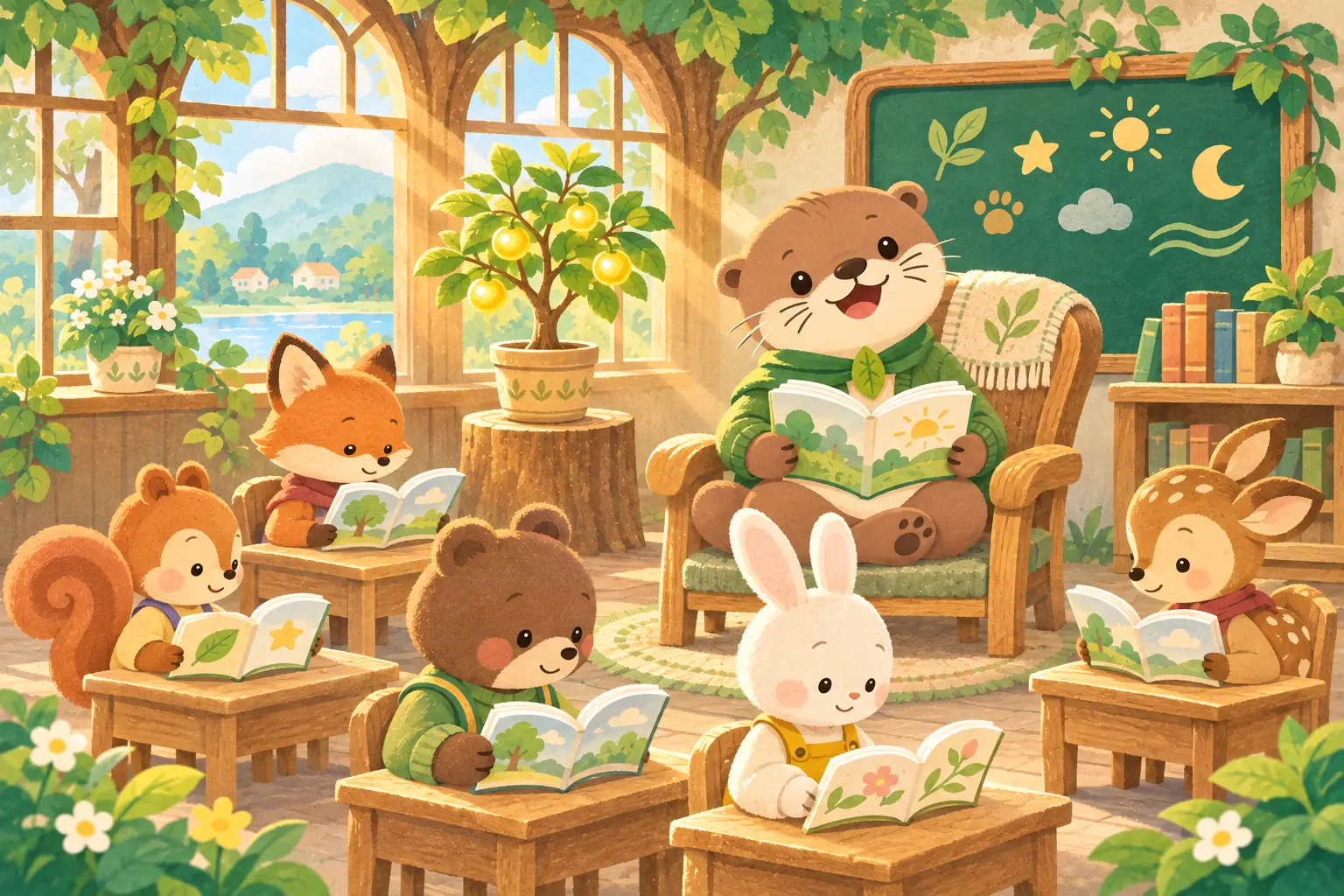
The best elementary morning meeting questions do more than fill ten minutes after the bell—they turn a frantic arrival window into a calm, connected launchpad for the whole school day. Below you will find a clockwise four-station arrival flow that eliminates folder bottlenecks, a zero-prep five-day homeroom schedule, teacher-modeled 10-minute silent reading guidelines, and 80 inclusive one-minute sharing prompts organized for all 40 weeks of Grades K–6.
Tame Morning Chaos: The 5-Minute 4-Station Arrival Flow
Morning chaos almost always starts with backtracking: kids drop heavy backpacks at their desks, start chatting, and then surge back toward the teacher's table all at once when you call for homework and permission slips. When you lay out arrival as a one-way, four-station loop starting right inside the classroom door, students complete every chore in one smooth lap while your hands stay free at the threshold to greet each child by name.
- Station 1 (Cubbies or Coat Hooks by the Door): Unpack & Stow. Hang up jackets and backpacks, park water bottles in the side crate, and hold only your take-home folder and last night's completed work before stepping into the aisle.
- Station 2 (Side Counter Turn-In Baskets): Lay Folders Open & Flat. Line up three shallow trays—*Daily Take-Home Folders (open to today's parent note section)*, *Math/ELA Practice*, and *Signed Permission Slips*. Having students stack folders open and flat lets a student helper spot missing folders in thirty seconds.
- Station 3 (Wall Weather Mood Chart): 1-Second Non-Verbal Check-In. Hang an illustrated four-zone poster (*Sunny, Breezy, Rainy, Stormy*) beside the baskets. Each student clips a numbered wooden clothespin—labeled only with their roster number for privacy—onto how they feel walking in. Spotting two pins on *Rainy* or *Stormy* lets you check in quietly after reading time or invite a child to take three slow breaths using your calm down corner ideas before small frustrations snowball.
- Station 4 (Home Desk): Pull Out Your Book-Bin Read. Every student keeps two self-selected picture books, early chapter books, or nonfiction magazines inside their desk bin so nobody ever sits asking, "What do I do now?"
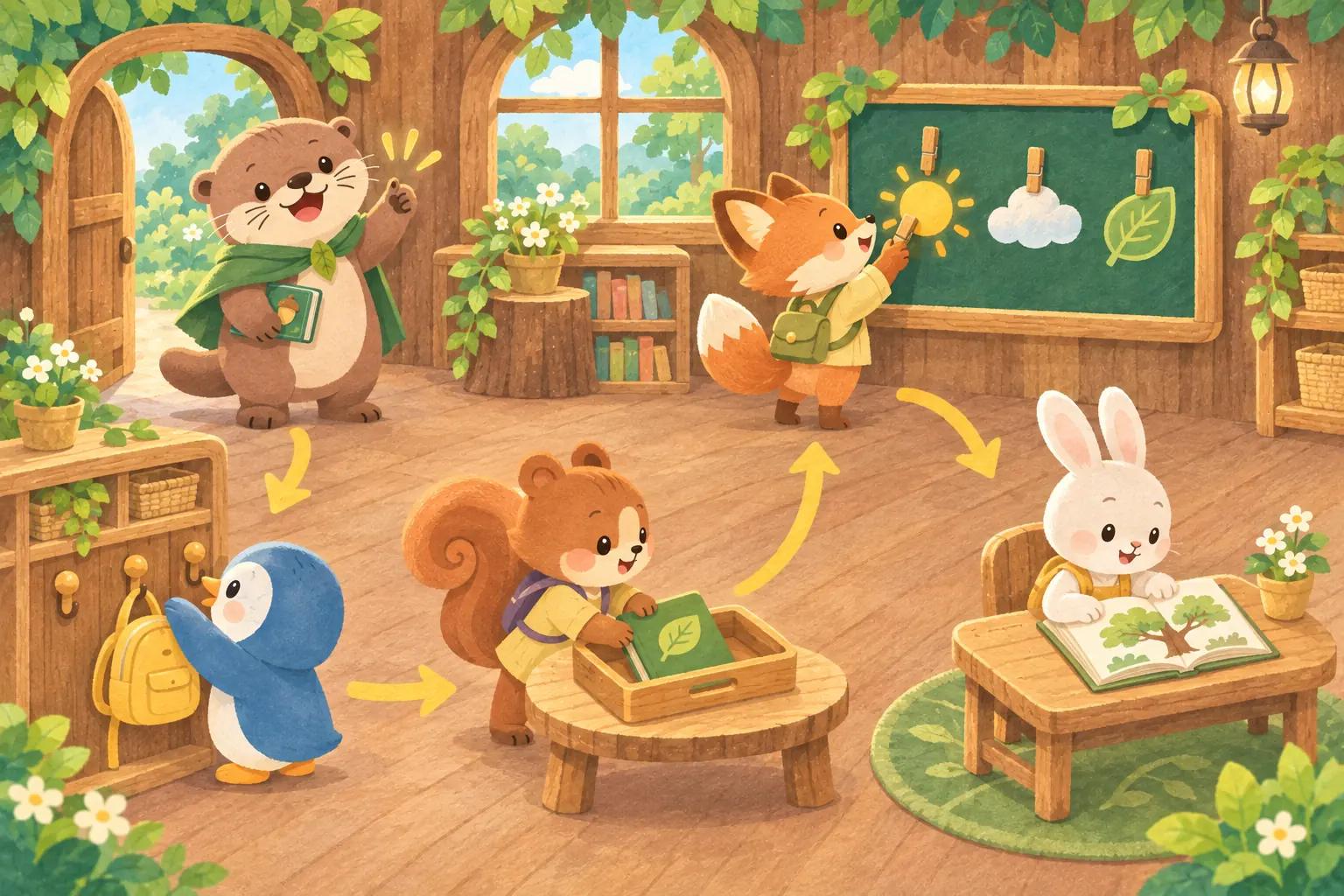
Post this crisp visual checklist on the corner of your whiteboard during Week 1 so early bus riders and stragglers alike can run the loop independently:
Good morning! Walk our 4-Step Morning Loop in order:
1. HANG IT UP: Coat and backpack on your hook; water bottle filled and parked.
2. LAY IT FLAT: Open your take-home folder into Tray 1; permission slips in Tray 2.
3. CLIP YOUR WEATHER: Move your number pin to how your brain and body feel today.
4. OPEN A BOOK: Head straight to your seat and read quietly until our 8:15 chime!
(Need to sharpen two pencils or use the restroom? Go right before the 8:05 bell!)
Zero Nightly Prep: A Predictable 5-Day Homeroom Schedule
The easiest homeroom routine to sustain through May is giving every day of the week one signature 15-minute anchor. Students crave the predictability of knowing Tuesday is always cozy silent reading and Friday is always shout-outs, while you never spend Sunday night reinventing morning slides.
| Day & Anchor Theme | Core 15–20 Minute Routine | Teacher's Role | Student Helper Role |
|---|---|---|---|
| Monday: Circle Share | Weekend reset greeting + 1 projected prompt (30-sec partner turn-and-talk, 3 whole-class shares) | Pull 3 sticks; model warm eye contact | Slide helper displays prompt; class practices active listening |
| Tuesday: Silent Reading | Whole class + teacher read self-chosen books silently for 10–15 minutes | Sit up front reading your own real book | Folder helpers tally turn-in baskets in the final 3 minutes |
| Wednesday: World Wonder | Short kid-friendly science photo, seasonal nature clip, or "Notice & Wonder" mystery map | Read a 2-minute blurb or zoom into a photo | Raise hands to share one concrete observation |
| Thursday: Silent Reading | Continue Tuesday's book; optional 2-minute "1-sentence book buzz" with elbow partner at the end | Read alongside students; zero grading | Classroom librarians straighten book bins before Period 1 |
| Friday: Gratitude Mail & Council | Read 4–5 notes from the Kindness Mailbox + pick 1 small class goal for next week | Read specific peer shout-outs aloud | Mail carriers pass back graded work so desks start Monday fresh |
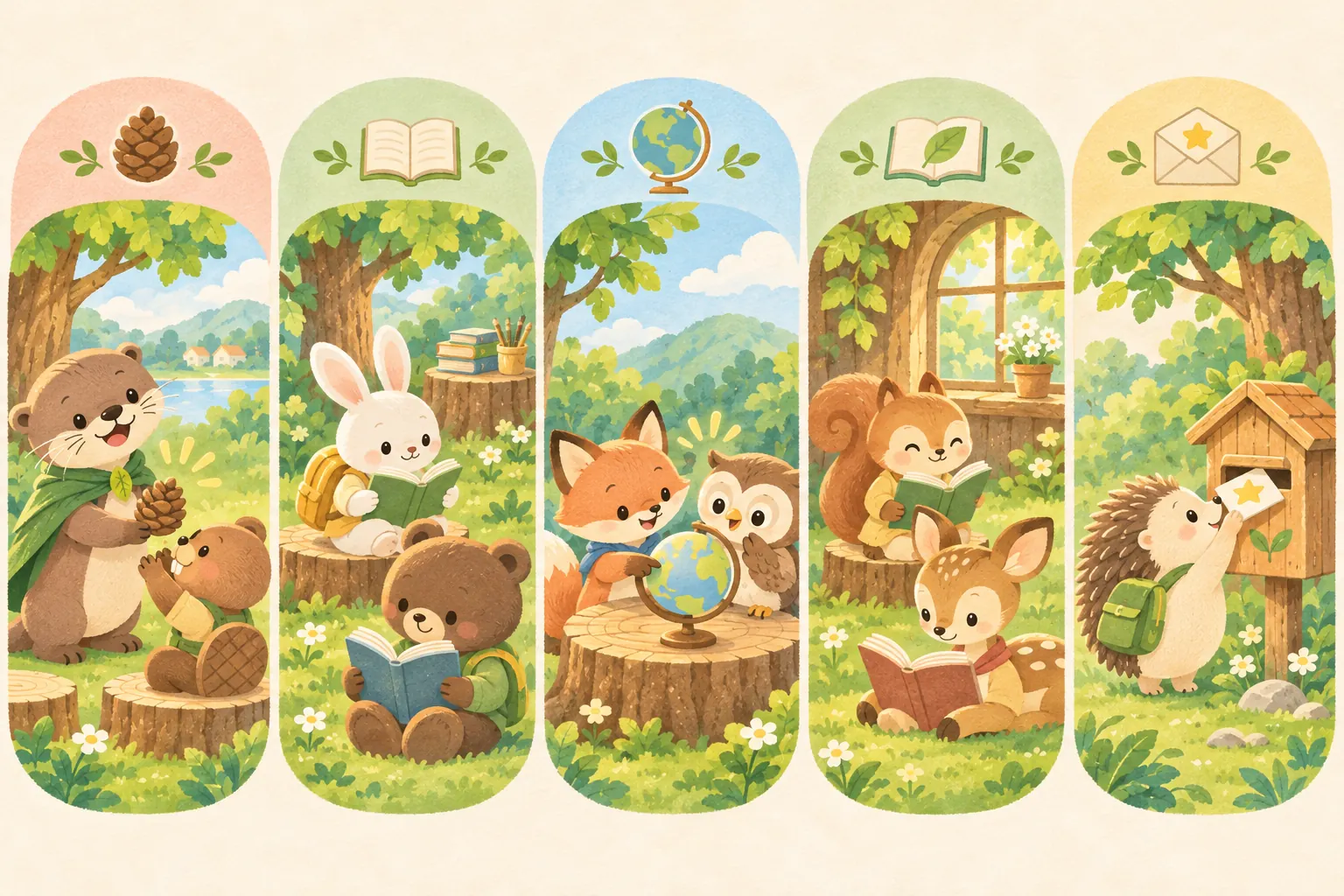
Adjust pacing slightly to match your grade band's attention span:
- Grades K–2: Keep circle shares brisk (8 to 10 minutes) and fill book bins with rich picture books, decodables, and illustrated animal books. Close Monday or Wednesday circle with one 30-second chant from our preschool fingerplays so wiggly hands fold right into laps before phonics begins.
- Grades 3–4: Third and fourth graders love fairness debates and tattling after recess. Channel that energy into Friday's 10-minute Class Council ("How can we make four-square line-ups fairer next week?") and Wednesday's weird-but-true science photos.
- Grades 5–6: Stretch Tuesday and Thursday independent reading to a full 15 minutes for graphic novels, biographies, and middle-grade fiction, and use Monday's "Would You Rather" ethical or creative dilemmas—upper-elementary kids engage deeply when treated like thoughtful young adults.
10-Minute Sustained Silent Reading That Runs Without Shushing
When morning independent reading falls apart by October, it is rarely because kids dislike stories—it is usually because the teacher uses those ten minutes to chase missing lunch counts, answer emails, or call students up to fix yesterday's math worksheet. Reviewing decades of research in *The Reading Teacher*, Garan and DeVoogd (2008) alongside the National Council of Teachers of English (NCTE, 2019) highlight two ingredients that make Sustained Silent Reading (SSR) thrive: visible adult modeling and low-stakes student book choice. Pull a stool up front, open a novel or picture book yourself, and read silently with your class for ten uninterrupted minutes; children settle into stillness twice as fast when they see you genuinely absorbed in pages too.
Use this troubleshooting grid to smooth out the four most common morning reading hiccups:
| Common Reading Hiccup | Root Cause | Low-Friction Classroom Fix | Quick Prep |
|---|---|---|---|
| Kids wander to the bookshelf every 2 minutes | Empty desk bin or picked a book that feels too dense | Rule: "Keep 2 books in your bin; book shopping happens Friday afternoon, not during SSR" | Mix comics, Guinness-style fact books, magazines, and picture books |
| Late bus riders walk in and break the quiet | Unsure what they missed, so they ask neighbors aloud | Teach silent entry: unpack, drop folder, open book immediately; teacher checks in afterward | Tape the 4-station visual strip right inside the doorframe |
| Reluctant readers dread finishing a book | Every finished book triggers a graded summary packet | Keep morning reading 100% worksheet-free; invite optional 1-sentence Thursday partner recs | Supply simple paper bookmarks to save yesterday's page |
| Classroom library feels stale by November | Same 60 titles sitting on shelves since September | Rotate a 25-book seasonal tub from the school library on the 1st of every month | Assign two Student Librarians to carry and display the new tub |
Print and frame these four simple agreements beside your classroom library:
1. YOU PICK IT: Choose stories, graphic novels, science books, poetry, or magazines you genuinely want to read.
2. PARK TWO AHEAD: Before afternoon pack-up, make sure tomorrow's book is waiting on top of your desk bin.
3. EVERYONE READS (INCLUDING YOUR TEACHER): When the soft chime rings, voices stay at zero and feet stay nested for 10 calm minutes.
4. ZERO QUIZZES: No reading logs or pop tests—just tuck in your bookmark when the chime rings and enjoy the story tomorrow!
80 Low-Stakes Morning Meeting Questions Kids Love Answering
Brief, structured morning check-ins build peer belonging that carries straight into academic blocks. Durlak et al.'s (2011) landmark meta-analysis of 213 universal school-based SEL programs (*N* = 270,034 students) found significant gains in social-emotional competence, school connectedness, and academic achievement, while Rimm-Kaufman and Chiu (2007) demonstrated in *Psychology in the Schools* that consistent Responsive Classroom Morning Meeting routines strengthen student-teacher closeness and academic engagement. During the first two weeks of school while classmates are still learning names, pair these prompts with movement-based getting to know you games; from Week 3 onward, project two prompts a week for a full year with zero repeats.
To hear from a room of twenty-eight students in under eight minutes without dragging, run 10 seconds silent think time -> 30 seconds partner turn-and-talk -> 3 random sticks for one-sentence whole-group shares, and always honor a polite "I'll pass and listen today" option.
1. What was the very first color or outdoor sound you noticed on your way to school this morning?
2. If your energy right now were a weather forecast, are you bright sunshine, a cool breeze, or a sleepy morning cloud?
3. What was the best single bite of food you ate over the weekend?
4. Which pencil, eraser, or folder in your backpack has been with you the longest?
5. What part of getting ready this morning went smoother than usual for you?
6. Looking at our weekly schedule on the board, which specials class or block are you most excited about?
7. What is one calm, cozy thing you like doing in the evening before bedtime?
8. If our whole class got 10 bonus minutes of outdoor recess today, what game would you vote to play?
9. Have you spotted a tree, flower, or cloud around our schoolyard that looks different from last week?
10. Breakfast showdown: warm pancakes and syrup, or crunchy toast and fruit?
11. Is there a small pattern, stripe, or color on your shoes or shirt today that makes you smile?
12. Which character from a book or show reminds you a little bit of yourself lately?
13. If you picked one "focus word" for yourself today—like Steady, Kind, Curious, or Brave—which word fits?
14. Right after school, do you prefer finishing homework first or having a snack and breather first?
15. What is one cool animal fact, new vocabulary word, or life hack you learned recently?
16. Which nature sound relaxes your brain the fastest: rain on a window, ocean waves, or birds chirping?
17. Which season has your favorite kind of morning air—spring, summer, autumn, or winter?
18. If a friendly squirrel peeked through our classroom window right now, what would it think we are doing?
19. Has a catchy song, rhythm, or rhyme been stuck in your head this week?
20. What is one small positive thing you hope to tell your family at dinner tonight?
21. Would you rather understand every animal language on Earth, or play any musical instrument the first time you touch it?
22. On a group art project, do you prefer painting one giant poster together or making four mini-panels and taping them into one mural?
23. For a class nature walk, would you rather explore a shady forest trail or a breezy sandy beach?
24. With a brand-new library pass, do you grab a space-and-volcanoes science book first or a mystery story first?
25. When you hit a tricky math puzzle, do you like thinking silently for three minutes first or talking it out right away with a partner?
26. When sharing a project, does going first feel easier to get it done, or does going near the end feel calmer?
27. Cafeteria soup vote: creamy tomato soup with grilled cheese, or warm chicken noodle soup?
28. Would you rather learn inside a cozy treehouse classroom in the oaks or a glass underwater classroom watching sea turtles?
29. When you make a mistake learning something brand new, what encouraging sentence from a friend helps the most?
30. What makes someone an awesome table partner: having creative ideas, or pitching in to clean up supplies without being asked?
31. If a time machine gave you one round-trip ticket, do you visit a schoolroom 100 years ago or a schoolroom 100 years in the future?
32. On a rainy indoor recess day, do you lean toward quiet drawing and reading or whole-class guessing games?
33. If every Tuesday suddenly had 25 hours instead of 24, do you spend your bonus hour sleeping in or playing outside?
34. How can two friends disagree about game rules at recess without anyone walking away hurt?
35. Do you enjoy tiny 5-minute daily challenges more, or building one big project over two weeks?
36. If our class adopted a leafy green pothos plant, what care job would be easiest to forget—and how could we remind ourselves?
37. When you lend a marker or glue stick to a neighbor, what small habit makes you happy to lend to them again next time?
38. Which skill takes more practice for humans: listening without interrupting, or raising your hand when you aren't 100% sure?
39. If you stepped inside an adventure book, would you pack a compass that guides you toward helpful friends or a lantern that never runs out?
40. When cleaning out your desk, how do you decide what is a useful supply versus paper clutter ready for recycling?
41. If all the supplies inside your pencil pouch woke up at midnight, what would your eraser and ruler chat about?
42. If clouds had flavors like snow cones, what flavor would the clouds outside our window be today?
43. Which storybook character or historical inventor would make the most fun guest student in our room for a day?
44. Suppose a pumpkin as tall as our flagpole sprouted on the playground overnight—what should our school turn it into?
45. If you invented a gentle "No-Grumpy-Mornings Alarm Clock," how would it wake people up nicely?
46. If woodland animals taught elementary specials, which animal should teach PE, music, or art—and why?
47. If we designed a classroom coat-of-arms shield, what two symbols belong right in the center?
48. Suppose anything drawn on our whiteboard with a blue marker became real for three minutes—what harmless thing would you draw for the class?
49. If your backpack grew two little sneakers and walked itself to school, where might it get distracted along the sidewalk?
50. If you shrank to the size of an acorn for one morning inside our classroom, which corner would you explore first?
51. If "Friday Afternoon" were a smoothie flavor, which two fruits would you blend together?
52. If the wind had visible pastel streaks of color, what color would today's breeze look like?
53. What one piece of friendly advice would you whisper to your Kindergarten self on the very first day of school?
54. If our classroom door opened onto any national park, biome, or wonder of the world for science today, where are we stepping out?
55. If every book smelled lightly like its setting when you flipped the pages, what does your current book smell like?
56. If your sneakers wrote a three-sentence diary entry about yesterday, which moment would they highlight?
57. If you could add one completely safe, brand-new piece of playground equipment outside, what would it do?
58. Suppose cars and buses took a holiday and everyone rode a friendly animal to school—which animal are you picking?
59. Rename one everyday cafeteria vegetable so it sounds like a five-star restaurant dish everyone wants to try!
60. If our class took a silly shadow-or-hands photo where no faces showed, what pose would prove it's us?
61. Did a classmate do a tiny, helpful thing for you this week—like holding a door, picking up a dropped pencil, or scooting over on the rug?
62. Think about your trip from bed to your desk this morning: how many different helpers kept our morning safe and running smoothly?
63. Who in our class have you noticed working quietly and persistently on something tricky lately?
64. Which shelf, center, or corner of our classroom looks super tidy today—and whose classroom job keeps it that way?
65. What is one kind sentence you heard someone say in our hallway or classroom this week?
66. Out of all our rotating classroom jobs, which job takes the most behind-the-scenes effort and deserves a round of applause?
67. What is one small school habit that used to feel hard in September, but now you do almost automatically?
68. If we delivered a two-sentence thank-you note to a school adult outside our room today—nurse, custodian, crossing guard, cafeteria staff, or librarian—who would you pick?
69. When someone spills supplies or feels frustrated in our class, what helpful response have you seen classmates do?
70. What has been our proudest "whole-class teamwork moment" so far this semester?
71. What strength do you bring to a small group—calm listening, steady timekeeping, neat drawing, or encouraging others?
72. What is one small chore you pitched in on at home recently without waiting to be asked twice?
73. Look at the tablemates around you: what is one cool talent or kindness you appreciate in a neighbor?
74. When our whole room settles into quiet, focused work or reading, what does that peaceful atmosphere feel like to you?
75. Was there an "aha!" moment in math, reading, science, or art this week where something suddenly clicked?
76. Give yourself a quiet pat on the back: what is one small effort you are proud of from the past few days?
77. Which bulletin board, hallway art display, or tree on campus made you pause and look twice this week?
78. What is one 5-second tweak everyone could make next week to help our pack-up or line-up run even smoother?
79. If our classroom mood this week were a cozy meal—like warm mac-and-cheese, crisp trail mix, or fruit salad—what would it be?
80. Before we head out on Friday afternoon, what encouraging wish do you want to leave for yourself and our class for Monday morning?
Late Arrivals, Guest Readers, and Keeping Homeroom Test-Free
Two logistical bottlenecks trip up morning routines faster than anything else: families wondering why homeroom is not used for timed test drills, and mornings when the homeroom teacher is pulled into an IEP meeting or committee huddle while a guest reader or colleague covers arrival. Share proactively at Back-to-School Night that keeping the first fifteen minutes test-free is intentional: children riding late buses or rushing through hectic mornings need a predictable buffer to unpack, regulate, and read so graded instruction during core blocks reflects what they actually know rather than how rushed 7:55 a.m. felt.
Whenever a family Mystery Reader, library volunteer, or colleague covers your homeroom window, send this concise handover note the afternoon before so students stay right in their familiar groove:
Dear [Volunteer / Colleague Name],

Thank you so much for joining our class tomorrow morning ([Date], 8:00–8:25 a.m.)! Here are three classroom cues our students already know by heart so your visit feels effortless:

1. Arrival & Rug Gathering (8:00–8:05 a.m.): Students walk our 4-station arrival loop on their own and read at desks. At 8:05, our Student Greeter (#__) will ring the desk chime once and invite Tables 1–5 to join you on the front rug with empty hands.
2. Quiet Signal: If excitement bubbles up during your story, simply hold one open palm in the air ("Give Me Five") without raising your voice—students will mirror your hand and settle within five seconds.
3. Projector & Support: Your read-aloud / picture slide is ready on the screen, and the nearest water fountain is just left of our doorway. If any student feels unwell or needs help, please send our Office Messenger (#__) next door to Room __ or buzz the main office at ext. ____.
4. Smooth Wrap-Up (8:25 a.m.): Right after two student questions, ask tables to return to seats and take out their ELA notebooks—I will step right back in at 8:25. Thank you again for sharing your morning with our kids!FAQ
Why should elementary homeroom stay free of pop quizzes and graded tests?
Buses run late, mornings at home vary wildly, and children walk in carrying different stress levels. Saving assessments for scheduled core instructional blocks—and using the first 15 to 20 minutes for arrival routines, independent reading, or community check-ins—lets nervous systems settle so every student starts Period 1 regulated and ready to learn.
How do I run 10 minutes of sustained silent reading without constantly shushing the room?
Put down your clipboard and red pen, pull a chair to the front of the rug, and genuinely read your own book for the full 10 minutes. Research on teacher-modeled Sustained Silent Reading shows students mirror adult focus far better than verbal reminders—especially when paired with two rules: pick books before the bell and zero mandatory book reports.
What morning meeting questions work best when you only have eight minutes?
Skip open-ended prompts like 'What did you do this weekend?' that stall kids who stayed home. Ask concrete sensory or 'Would You Rather' prompts everyone can answer—such as 'What was the first color you noticed outside today?' or 'Warm pancakes or crunchy toast?' Run a 30-second partner turn-and-talk, then invite three volunteers to share aloud.
How do I train students to unpack and turn in take-home folders without nagging?
Stop piling every bin in one bottleneck on your desk. Set up a clockwise, no-backtracking 4-station loop from the doorway: (1) hang backpack and coat, (2) lay open take-home folder flat in labeled trays, (3) clip numbered clothespin onto the weather mood chart, and (4) sit and open a book bin story. Walk the loop twice in Week 1 and greet at the door.
Sources
- The Benefits of Sustained Silent Reading: Scientific Research and Common Sense ConvergeThe Reading Teacher2008
- The Impact of Enhancing Students' Social and Emotional Learning: A Meta-Analysis of School-Based Universal InterventionsChild Development2011
- Promoting social and academic competence in the classroom: An intervention study examining the contribution of the Responsive Classroom approachPsychology in the Schools2007
- Statement on Independent ReadingNational Council of Teachers of English2019